

Solutions
DEISO provides several professional sustainability evaluation services such as Life Cycle Assessment (LCA) for better environmental and health design, technology development, and manufacturing processes. Including, e.g., comprehensive environmental evaluation of a system, product, technology, or service from the cradle-to-grave, gate-to-gate, and gate-to-grave evaluation. We consider part of the lifecycle or the entire cycle based on the customer needs: (1) extraction of raw materials phase, (2) production/manufacturing phase, (3) transportation phase, (4) the use phase of the product or technology, and (5) the end-of-life phase (the waste disposal or recycling).
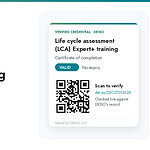
We help our customers understand the environmental impacts or performance of multiple environmental and public health issues such as climate change, ecosystem toxicity, human toxicity, ozone-layer depletion potential—also, damage to resources, ecosystem, biodiversity, and energy and resources depletion, besides understanding the environmental performance of their technology or product developments stages. We help highlight the hotspots of the environmental consequences on a specific process or stage or phase of the entire life cycle and shed light on the opportunities for improvements. We help them reduce GHG emissions, compare their products or technologies with others, and analyze energy savings potentials. We also offer LCA training, consulting, and LCI-related data advice for their projects, in addition to the evaluation services.
We also offer training, consultancy on LCA and its Life Cycle Inventory (LCI) data and software such as SimaPro, GaBi ts, openLCA, and the ecoinvent LCI database and other databases.
Also, we provide Social Life Cycle Assessment (S-LCA) services to assess the social impacts within economic activities and the impacts on people and well-being. This is considered one of the leading development goals of today modern societies. Such evaluation can improve well-being and social welfare. It is a critical element of public policies and decision-making by considering the social benefit and impacts and cultural elements, several critical social development values, and lifestyle. All affect the way social issues are being seen and evaluated. Furthermore, social impacts and the supply chains are increasingly assessed by different stakeholders involved in sustainable development, such as the governments, non-governmental organizations, businesses, and academia.
Features
Life Cycle Assessment (LCA)
With LCA, we evaluate the multiple environmental impacts associated with all phases of the lifecycle of a product, process, system, technology or commercial service.
Material Flow Cost Accounting (MFCA)
With MFCA, we calculate the actual costs of material losses.
CO2 Balances
CO2 balances calculations for the determination of the carbon footprint of a product or service.
Environmental Product Declarations (EPD)
Calculation of Environmental Product Declarations (EPD)
Life Cycle Cost (LCC)
Cost analysis: we identify the impact of improvement measures on product costs. Through a comprehensive cost analysis using the Life Cycle Cost (LCC) calculation, we develop different scenarios related to changes in technology, market, price, and demand.
Life Cycle Inventory (LCI) data estimation
We provide our clients with LCI estimations for processes that have no data on their emission factors or environmental impacts, such as Climate Change. We currently provide this service for specific areas such as waste management and chemicals. We are expanding the domains in which we provide such LCI data estimates.
Material Flow Analysis (MFA)
We quantify the flows and stocks of materials or substances in a system to analyze all the aspects of the processes that entering and leaving the system of materials and energy with input/output analysis.
Social Life Cycle Assessment (S-LCA)
With S-LCA, we seek to assess the social impacts of a product throughout its life cycle. Considering all the aspects, including the potential positive and negative impacts throughout the life-cycle.
LCA Training Programs
Share this:
- Email a link to a friend (Opens in new window) Email
- Share on LinkedIn (Opens in new window) LinkedIn
- Share on X (Opens in new window) X
- Share on Facebook (Opens in new window) Facebook
- Share on WhatsApp (Opens in new window) WhatsApp
- Share on Reddit (Opens in new window) Reddit
- Print (Opens in new window) Print
- More