

Type a question or a keyword. Pick a section to search inside it only.
What DEISO is and how it works
What DEISO builds, who does the work, and where an engagement fits.
What does DEISO actually build?
Sustainability Operating Systems — the structure an organisation works inside to run sustainability repeatedly. Data workflows, calculation logic, evidence handling, review steps, responsibilities, and governance, assembled into one system rather than a series of disconnected studies.
DEISO builds that structure and does the technical work inside it, across LCA, PCF, EPD, Scope 1–3, and ESG.
How is this different from hiring a consultancy?
A consultancy typically leaves you a report. When the reviewer asks how a figure was reached, or the analyst who built it moves on, the work cannot be reproduced.
DEISO leaves you the report and the system that produced it — documented method, traceable data, and a team trained to run the next cycle without starting over.
Who does the technical work?
Senior practitioners. Engagements are run by people who have built the models, defended the assumptions, and been through review — not routed to junior staff once the contract is signed.
Which sectors does DEISO work in?
Sectors where the data is difficult and the numbers face scrutiny:
- Energy, oil and gas
- Chemicals and materials
- Manufacturing and industrial systems
- Construction and the built environment
- Agriculture and food systems
- Waste management and circular economy
- Electronics and technology
- Universities, research institutes, and public sustainability bodies
Where is DEISO based, what languages do you work in, and which regions do you cover?
Technical work, reports and training are delivered in English and Japanese. Arabic is available for engagements in the Gulf region on request, with additional fees. Where a report has to be read by a verifier in one language and a board in another, that is handled at scope stage rather than as an afterthought.
DEISO is based in Tokyo and works internationally — Japan, the Gulf, Europe, and other markets. Remote delivery is the default and works across time zones; on-site work is arranged where the engagement genuinely needs people in the room, such as site data collection, facility walkthroughs, or on-site training.
Method and standards travel unchanged. What changes by region is the regulatory frame, the data availability, and what a local customer or regulator expects to see as evidence — each engagement is scoped against those rather than against a generic template.
Technical work and review
What DEISO executes, what it reviews, and where the boundary sits.
What technical work does DEISO execute?
- Life cycle assessment — goal and scope through to interpretation, ISO 14040/44
- Product carbon footprint — ISO 14067, boundary definition through calculation
- EPD — PCR interpretation, background modelling, and preparation to EN 15804
- GHG accounting — Scope 1, 2, and 3 inventories on the GHG Protocol
- Social LCA — social impact assessment alongside environmental work
- ESG — reporting architecture, data systems, and disclosure preparation
- Independent technical review — critical review to ISO 14071, and pre-submission review
Which standards and reporting frameworks does DEISO work to?
LCA
ISO 14040 and ISO 14044, with ISO 14071 for critical review and ISO/TS 14072 where the assessment is at organisational level.
Product carbon footprint
ISO 14067, the GHG Protocol Product Life Cycle Standard, and PAS 2050 where a customer still asks for it.
GHG accounting, Scopes 1 and 2
The GHG Protocol Corporate Standard with the Scope 2 Guidance for market-based and location-based reporting, and ISO 14064-1 for organisational inventories. ISO 14064-2 applies to project-level reductions, ISO 14064-3 to validation and verification, and ISO 14069 as implementation guidance.
Scope 3
The GHG Protocol Corporate Value Chain (Scope 3) Standard across all fifteen categories, with the Scope 3 Technical Guidance for calculation method and data hierarchy, alongside ISO 14064-1 for indirect emissions.
EPD
ISO 14025 for Type III declarations, EN 15804+A2 and the relevant PCR for construction products, ISO 21930 for construction works, and ISO 14026 for footprint communication. Programme operator rules — EPD International, IBU, EPD Norge and others — are followed as the operator publishes them. ISO 14020 and ISO 14021 apply where the claim is a label rather than a declaration.
S-LCA
The UNEP Guidelines for Social Life Cycle Assessment of Products and Organizations and their methodological sheets, with ISO 26000 as the social responsibility reference, and established social inventory databases for background data.
Reporting frameworks
DEISO prepares the underlying data and evidence so it stands up under CSRD and ESRS, ISSB / IFRS S1 and S2, CDP, SBTi, TCFD and CBAM, and aligns the work with whichever framework your disclosure must satisfy. The framework does not change the physics; it changes the boundary, the evidence rules and the documentation level, and that is set at scope stage.
If your requirement comes from a customer questionnaire, a tender or a regulator’s template rather than a named standard, send the document itself and the scope is built against what you actually have to answer.
Does DEISO certify or verify?
No. DEISO is not a certification body, verifier, or programme operator, and does not issue verification statements.
What DEISO does is get the work to the point where it survives verification — technical execution, independent review, and pre-submission checks against the standard the study will be judged by. Formal verification is then carried out by the authorised body.
Our Scope 3 data is incomplete. Can that still be worked with?
Yes — incomplete Scope 3 data is the normal starting condition, not an obstacle. The work covers screening, category relevance, supplier engagement structure, primary against secondary data decisions, emission factor selection, and a documented improvement path.
What matters for defensibility is not perfect data but stated assumptions, traceable sources, and a boundary a reviewer can follow.
We already have a study. Can DEISO review it rather than redo it?
Yes. Independent review is a standing service — existing LCA, PCF, EPD, or GHG work reviewed for methodological consistency, boundary integrity, data quality, and readiness before it goes to a verifier, a customer, or a tender.
The output is a structured set of findings and the changes needed, not a rebuilt study.
What is the rapid 48–72 hour review, and what does it cover?
It is a short, senior-level intervention for when something is already built and a date is close — a study going to a verifier, a customer questionnaire due, a tender annex, or a number nobody internally can defend yet.
Within 48 to 72 hours of the material arriving, DEISO reviews what you have and returns written findings: where the method or boundary breaks, which assumptions will be challenged, which data points are weak or untraceable, what has to be corrected before submission, and what can be left as a documented limitation. Findings are ordered by what puts the submission at risk rather than by what is easiest to fix.
What it is not: it does not rebuild your study, produce a new model, or replace a full critical review under ISO 14071, and it is not verification. It tells you where you stand and what to do next, fast.
It works best when the material is complete enough to review — the report or model, the data behind it, and the standard or framework it has to satisfy. The clock starts when that arrives, not when the enquiry is sent.
Can we buy expert time without commissioning a project?
Yes. Hourly technical advisory is direct access to a senior practitioner for a specific question, without scoping a full engagement.
What the hours cover
Software work in openLCA, SimaPro and LCA for Experts (GaBi) — modelling questions, troubleshooting a model that will not behave, checking a model someone else built. EPD work, including EPD review. LCA, PCF, GHG and S-LCA method questions: the framework of a study, boundary and allocation decisions, emission factor choices you need to defend, ISO alignment, a second opinion on an approach, preparation before a review or a verifier call, or a sanity check on a number before it goes to a customer.
How it runs
You book time, send the question and the material behind it in advance, and the session is spent on the problem rather than on background. Where a written answer is more useful than a call, you get the reasoning in writing so it can go straight into the study file.
Where the line sits
It stays advisory. DEISO does not build or rebuild a model inside advisory hours; when a question turns out to need real execution, you are told so and it becomes a scoped piece of work rather than hours quietly absorbing a project.
Pricing
Rates published on the website include 10% tax. Payment in advance confirms the booking.
Can we use the results to compare our product against a competitor’s?
Sometimes, but not on the basis of an ordinary study. A comparative assertion disclosed to the public is the most tightly controlled thing in ISO 14040 and 14044: the compared systems need equivalent functional units, equivalent boundaries, equivalent data quality and equivalent methodological choices, and the study must undergo a critical review by a panel of interested parties before the claim is made.
That means a comparison has to be designed as a comparison from the start. A footprint built for internal decisions or a customer questionnaire cannot be turned into a public competitor claim afterwards without redoing the parts that were never set up to be comparable — and the same applies to comparing your figure against a competitor’s published EPD, which was built to a different PCR or boundary more often than not.
DEISO will tell you early whether the claim you want is supportable, what it would take to support it, and where a weaker but defensible statement gets you the same commercial result with far less exposure. An unsupportable public comparison is a legal and reputational risk, not just a technical one.
Where the comparison stays internal — your own products against each other, design options, supplier choices — the constraints are far lighter, and that is usually where the real decision value sits.
We already work with another consultant. Can DEISO work alongside them?
Yes, and it is a common arrangement. DEISO often comes in for the part that needs depth the existing provider does not carry — the model itself, a difficult Scope 3 category, an EPD that has to follow a PCR, or an independent review before the work goes out.
Independence is the one condition. DEISO does not review its own work, so where DEISO executes a study, the critical review comes from elsewhere, and where DEISO reviews, it does not then rebuild the study it just criticised. That separation is what makes the review worth anything to a verifier.
Working next to another provider is handled openly: roles, boundaries and who owns which output are written into the proposal, so nothing falls between two firms and nothing gets done twice. If the honest answer is that your current provider should finish the piece they started, you will hear that.
How an engagement runs
What happens between first contact and finished work.
What does the process look like?
Inquiry, scope clarification, technical review of what is actually needed, proposal or quotation, kickoff, execution, internal review, and handover. Scope clarification is where most of the value sits — a badly framed question produces a technically correct answer nobody can use.
We are not sure which service we need. Where do we start?
That is a common and entirely reasonable starting point. Use the service finder to narrow by requirement, ask DEISO Mirai AI Pro in plain language, or send the situation directly and DEISO will point you to the right scope — including saying when the answer is a smaller piece of work than you expected.
What is the Free Technical Evaluation, and what happens in it?
It is a scoped technical conversation with a senior practitioner, at no cost, before any commercial discussion. The purpose is to work out what you actually need — not to present DEISO’s catalogue.
You describe the situation: the product, organisation or system in question, what the output is for, the standard or framework it has to satisfy, what data exists today, and the deadline. DEISO tells you what the work realistically involves, where the risks sit, what has to be in place before it can start, and which service is the right entry point — including when that is a smaller piece of work than you expected, or when the honest answer is that you do not need DEISO for it yet.
What it is not: it is not a free study, a free review of a full report, or a free answer to a technical question you would otherwise pay advisory hours for. It establishes scope, so that any quotation that follows is built on something real.
You can book it inside a Mirai conversation, or request it through the contact form or .
What should we have ready before contacting DEISO?
Enough to scope the work honestly. Nothing here is a prerequisite — gaps are normal and are part of what gets scoped:
- What the output is for — a customer, a regulator, a tender, an internal decision
- The product, organisation, or system boundary in question
- The standard, framework, or reporting requirement it must meet
- Who owns the outcome internally
- What data and documentation exist today
- The deadline, and what is driving it
How much of our team’s time does an engagement take?
Less than people fear, but not zero — and the parts that need you cannot be done by DEISO on your behalf.
What DEISO needs from you
Activity data and documentation from your own systems: production volumes, energy and material consumption, process descriptions, supplier information, transport and waste data, and whatever specifications sit behind the product. Access to the people who actually know how the process runs, usually for a small number of focused sessions rather than standing meetings. Decisions that are yours to make, such as which products are in scope and what the output has to satisfy.
Who you need internally
One owner with authority to answer questions and unblock data requests, plus whoever holds the operational data — typically production, procurement, energy or facilities. The owner matters more than the headcount; engagements slow down when nobody internally has the mandate to decide.
How the time is spread
Concentrated at the start, during data collection, and again at review. The modelling phase in between needs little from you. Every proposal marks the points where DEISO needs something from your side, since those are what move a deadline rather than the calculation itself.
Where DEISO takes the load
Structuring the data requests so your team is not guessing what is wanted, chasing gaps, building the collection templates, and handling suppliers directly where that is faster than routing everything through you.
How long does a study take?
A typical study runs about 2 to 3 months. The schedule is set by data readiness more than by the calculation, since modelling is rarely the slow part while collecting activity data, supplier information and documentation usually is.
A tightly scoped single-product footprint with data already in hand lands at the shorter end. A multi-site or multi-product study, an EPD that has to follow a PCR, or a Scope 3 inventory that needs supplier engagement sits at the longer end, and an external verification step adds the verifier’s own timeline on top.
Every engagement is given a dated schedule at proposal stage, with the points where DEISO needs something from your side marked, since those are what move a deadline. If a date is already fixed by a customer, tender or regulator, say so at first contact and the scope is built backwards from it.
What do we actually receive at the end of an engagement?
A technical report written to the standard the study is judged by, with goal and scope, boundary, data sources, assumptions, calculations, results and interpretation set out so a reviewer can follow each number back to its source.
Alongside it you get the supporting material that makes the report defensible: the data inventory, the emission factor and dataset references, the documented assumptions, and an evidence pack ready for a verifier, a customer or a tender file. Where the work is part of a Sustainability Operating System, the method documentation and workflow stay with you too, so the next cycle starts from the system rather than from scratch.
Results presentations, summary versions for non-technical readers, and handover sessions with your team are included where the engagement calls for them, and are named in the proposal so nothing is assumed.
Our deadline is very close. Is it too late to start?
Not necessarily, but what is possible narrows quickly, and the honest answer depends on what already exists.
If a study is built and the deadline is a submission, a customer questionnaire or a tender annex, the rapid 48–72 hour review is designed for exactly that: written findings on where the work breaks, what must be corrected before it goes out, and what can be left as a documented limitation.
If nothing is built and the deadline is weeks away, DEISO will tell you plainly whether a defensible result is reachable in the time, and what a reduced but honest scope would look like — a narrower boundary, fewer products, screening rather than a full inventory, with the limitations stated in the output. A rushed study that collapses under review costs more than a smaller one that holds.
What DEISO will not do is accept a deadline it cannot meet, or produce something that will not survive the reviewer, to fill a date. If the timeline does not work, you are told at first contact rather than three weeks in.
Send the deadline, what is driving it, and what exists today — that is enough to get a straight answer.
We have no sustainability data and no internal expertise. Is it too early to talk to DEISO?
No. Starting from nothing is a normal entry point, and it is usually cheaper to build the structure correctly than to correct a year of work done in the wrong shape.
The first task is not a study. It is establishing what you actually have to report and to whom — a customer, a tender, a regulator, an investor, or an internal decision — because that sets the boundary, the standard and the evidence rules. From there, DEISO identifies what data exists inside your systems already, which is usually more than people expect, what has to be collected, and who inside the organisation has to own each piece.
That can be built as a first scoped piece of work, as a Sustainability Operating System from the start so the second cycle is not another rescue project, or as training that puts the capability inside your team.
If you are not sure which of those applies, describe the situation in Mirai’s Analysis mode or book the Free Technical Evaluation — including when the honest answer is that you need a smaller piece of work than you thought, or nothing yet.
What happens if the verifier or the customer comes back with comments?
Reviewer and customer comments are expected, not a failure. A study is written from the start to survive that round — traceable data, stated assumptions, and a boundary someone else can follow.
Responding to those comments is a paid service, quoted separately. It is not free aftercare and is not bundled into the original engagement, because the volume and depth of a comment round cannot be known when the study is scoped. Where the proposal includes a defined response allowance, that is stated in the proposal itself; anything beyond it is quoted.
DEISO reviews what came back, separates what genuinely requires a change from what requires a clearer explanation, and prepares the response and any corrections to the model or report. You get the scope and the price before the work starts, so nothing runs up against an open clock.
The same applies to work DEISO did not produce: it is handled as independent review, or as a rapid review where the deadline is close. Both are quoted.
Price, contracting, and payment
What drives cost, how a quotation is issued, and how payment works.
What does an LCA, PCF, EPD or GHG inventory cost?
Price depends on what the study has to survive, not on a fixed rate card. The main drivers are the number of products or sites in scope, how much primary data exists versus what has to be built, the standard and whether external verification follows, whether comparative claims are involved, and the deadline.
A single-product footprint with clean data and a multi-site Scope 3 inventory are different orders of work, so DEISO quotes after scope clarification rather than before. Send the product or boundary, the standard it must meet, and the deadline, and you get a fixed-price quotation with the deliverables named.
How is a quotation issued?
How does contracting and payment work for a project?
Contracting
Scope, price, timeline and deliverables are confirmed together in a written proposal before anything starts — never scope first and price later. Once you accept, that document is what the engagement runs against, and a change to scope is agreed in writing rather than absorbed silently. An NDA can be signed before anything technical is exchanged, and DEISO will work under your template. Where your organisation requires vendor registration, a purchase order, or a specific contract form, send the requirements early — that process is usually the slowest part of getting started, not the technical scoping.
Invoicing
Invoicing is staged against the engagement rather than charged in one lump at the end, with the stages named in the proposal so you know what triggers each invoice. Currency and the invoicing entity are confirmed at proposal stage, since DEISO works across Japan and the Gulf. Japanese consumption tax at 10% applies where the engagement is taxable in Japan; the proposal states the tax treatment rather than leaving it to the invoice.
Payment by bank transfer
All banking charges are on the client’s side — the sending bank in your country, any intermediate bank, and DEISO’s receiving bank. DEISO must receive the net quoted or invoiced amount, so instruct your bank accordingly (charges “OUR”). A short transfer can hold up the start of work.
Payment online
Online payment is available. A surcharge of [X]% is added to the invoice to cover payment gateway and bank processing fees.
How is confidentiality handled?
Client data is treated as confidential by default, not on request. Product specifications, supplier information, cost data, primary measurements and unpublished results stay inside the engagement and are not reused for other clients, shown in examples, or published. An NDA can be signed before anything technical is exchanged, and DEISO will sign your template rather than insisting on its own.
For this chat: what you type to Mirai is used to answer you and to route your enquiry to the right service. Treat it as an enquiry channel rather than a secure one, and keep confidential material for the contact form, email, or a call under NDA. Nothing you say here becomes part of a public page.
Software, databases, and ownership
Which tools the work is built in, who buys which licence, and what you keep.
Which databases and software do you use, and who owns the model and data afterwards?
DEISO selects the software the study is built in — SimaPro, GaBi / LCA for Experts, or openLCA. That choice is a technical decision, made by DEISO on the basis of the standard the study must meet, the database the work depends on, the modelling the product or system requires, and how the results will be reviewed. It is not a client preference, because the wrong tool for a given study costs defensibility later.
Background data comes from recognised life cycle inventory databases, with the specific datasets, versions and emission factor sources named in the report so a reviewer can trace every figure.
For most work you do not need your own licence. For some projects you do: where the work is delivered in openLCA and the study depends on a commercial background database, the client purchases that database licence in their own name. This applies across LCA, PCF, EPD and S-LCA work, and it is stated in the proposal before anything starts, never raised later.
If you want the model file itself handed over rather than the report and documentation, that is agreed at proposal stage, since it depends on the database licence terms in force — some datasets cannot be redistributed, and DEISO will not breach a licence to move a file.
Your data stays yours. The primary data you provide, the results and the report are the client’s; the method documentation is written so the study can be rebuilt or updated without depending on DEISO.
Can we see examples of your work or speak to a reference?
Published case studies are on the website, written at the level of detail that confidentiality allows — the technical problem, the approach, and what the work produced.
Full client reports are not shared. The data inside them belongs to the client, and a firm that circulates one client’s study to win the next engagement is telling you exactly how it will treat yours. Client names are used only where that client has agreed; otherwise engagements are described by sector.
What you can have instead is more useful than a sample report: bring your own case to the Free Technical Evaluation and you will hear how DEISO would approach it, where the difficulties sit, and what the method would be. Technical depth shows in how a problem is diagnosed, not in a redacted PDF.
Where a reference is genuinely required — a tender that demands one, for example — ask, and DEISO will approach a past client for permission rather than offering a name that was never cleared.
Training and capacity building
How training fits the operating system, and the terms it runs on.
Why does DEISO run training at all?
Because a system nobody in the organisation can operate is not a system. Capacity building is how the work stops depending on an external provider — your team learns to run the same methods, inside the same structure, on the next cycle.
What programs are available?
- LCA, from foundations through to expert level
- GHG accounting and carbon reporting across Scopes 1–3
- Scope 3 and product carbon footprint
- EPD development
- ESG strategy and reporting
- Life cycle costing
- Software training in SimaPro, GaBi / LCA for Experts, and openLCA
Can training be built around our own products and data?
Yes, and that is the format that holds. Programs can be shaped by sector, technical level, software environment, reporting framework, and organisational objective — worked on the participants’ own cases rather than generic examples.
When can we start, what does it cost, and how is it delivered?
What makes DEISO training different
DEISO does not wait for a minimum number of trainees, and does not run batch classes or fixed public dates. A program runs for one person or for a group. Training starts as soon as the schedule is confirmed — and, for remote training, as soon as payment is received. For on-site and off-site training, the start is confirmed once the arrangements and payment terms are agreed. One person is enough to open a program.
Scheduling
Every program is booked on demand, one-to-one or one-to-group. The date is set between the trainee’s or trainees’ availability and the expert trainer’s. DEISO can propose several schedule options — A, B, C — and you choose, regardless of the time-zone difference.
Training in Japan
All DEISO training delivered in Tokyo runs Monday to Friday, five business days, as a fixed duration. Japanese national holidays are excluded, and the start day is set only after the holiday calendar for that period has been checked, so the five days run without interruption.
Format
Remote over Zoom, on-site at your facilities, or off-site in Japan. Some programs are on-site or off-site only.
Trainers
All programs are delivered by PhD-level experts in the field.
Pricing
All prices published on the website are for remote, online training delivered over Zoom. Off-site training and training in Japan are considerably more expensive and are quoted separately. Published prices exclude 10% tax, and exclude the optional examination and certification fees, which appear on the quotation only when requested and are also subject to 10% tax.
Payment
Remote training: payment in advance confirms the booking. Training in Japan: typically payment in advance. On-site and off-site training: payment terms handled case by case.
Certificate
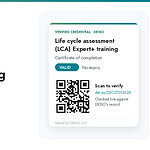
The examination and certificate are optional and charged separately. The certificate recognises completion of the DEISO program and its assessment; it is not a formal accreditation, and DEISO is not a certification body.
To book
Send the team size, the level, the software environment and what the team needs to be able to do afterwards, and you get a quotation with schedule options attached.
What is the cancellation and rescheduling policy for training?
Remote training (online, over Zoom)
Payment is made in full in advance and confirms the booking. Once confirmed, bookings cannot be cancelled and payments are final — no refunds, in whole or in part, including for non-attendance or partial attendance. One reschedule is allowed at no charge if requested at least 5 business days before the start date; later than that, or a second reschedule, is treated as a new booking.
Training in Japan (off-site, Tokyo)
100% of the quotation is payable in advance. The booking is confirmed only when payment is received, since the trainer, the dates and the learning environment are reserved against it.
Cancellation or postponement notice must reach DEISO in writing. The charge depends on when it arrives:
- 30 calendar days or more before the start — 25% of the quotation is payable
- 10 to 29 calendar days before the start — 50% of the quotation is payable
- 9 calendar days or less (7 business days), or no notice — 100% of the quotation is payable
Where payment terms have been agreed at 30 days, or fall due after the training start, the same charges apply as a debt: failing to notify DEISO at least 9 calendar days (7 business days) before the start makes 100% of the quotation payable, whether or not the training takes place and whether or not an invoice has yet been issued.
On-site training (at your facilities, any country)
The same notice periods and charges as training in Japan. In addition, all travel, accommodation and venue costs already committed at the time of cancellation are payable in full on top of the applicable percentage, since those are third-party bookings DEISO cannot recover.
In every case
Non-attendance, late arrival or partial attendance does not reduce the fee. If DEISO cancels or postpones for any reason, you are offered new dates or a full refund of everything paid, at your choice. Where a genuine force majeure event prevents delivery — travel restriction, natural disaster, or similar — both sides agree new dates rather than a cancellation charge.
I lost my training certificate, or I cannot access it. What should I do?
Certificates are issued and stored in a DEISO platform, and which one depends on when the training took place. This applies to every format — remote, on-site, off-site, and training in Japan.
Training taken before 28 September 2026
Sign in to DEISO Spectra at sp.dei.so and open the certification section, where your certificate is available to download.
Training taken on or after 28 September 2026
Sign in to DEISO Grid at grid.dei.so and follow the same steps — the certification section holds your certificate for download.
If you cannot sign in
Check your email first: your username and password were sent to you by DEISO, from or . Search your inbox and your spam folder for those senders. If you still cannot get in, use the platform’s own username and password recovery, which resolves most access problems immediately and is faster than writing to us.
If recovery does not work
Contact DEISO at with the program name and the approximate training dates, and the certificate will be reissued to you.
Platforms, tools, and AI
Where software and AI sit inside the operating system — and where they do not.
Does DEISO build software?
Yes — LCC engines, PCF calculators, and GHG data systems, built by the people who do the science rather than by a development shop working from a specification.
DEISO also advises at the architecture level on platforms a client is building internally, and evaluates systems already in place.
Can DEISO advise on an AI platform we are building ourselves?
Yes. Strategic advisory at the systems architecture level — system logic, model boundaries, data integrity, governance structure, scalability, and integration. DEISO defines and reviews the architecture; it does not operate as an outsourced development studio.
Where implementation already exists, DEISO tests and evaluates it and returns written findings.
Is any part of our study produced by AI?
No. The methodological work is done by practitioners. Boundary decisions, allocation choices, emission factor selection, data quality judgements, interpretation and anything a reviewer will challenge stay with the person who has to defend them.
Where DEISO’s AI engines do work is on top of results that are already calculated and checked: turning verified figures into charts, visuals and the narrative layer of a report, and running inside the DEISO platforms shared with clients — dashboards, analysis views and reporting workflows. They present and organise work; they do not produce it. A chart is regenerated from the underlying data, so nothing in a visual exists that is not in the model behind it.
AI is also used for structured analysis, cross-checking data, service routing and decision support. It is an assistive layer over work a named practitioner owns.
That boundary exists because of how verification works. A verifier asks why a figure is what it is, and the answer has to trace back to a dataset, an assumption and a person who made a defensible choice. A number that cannot be explained is not defensible, whatever produced it.
Your data is not used to train any AI system, and what you share stays inside the engagement.
What is DEISO Mirai AI Pro, and when do I get a human?
DEISO Mirai AI Pro is a sustainability execution assistant — a genuinely powerful intelligence layer over DEISO’s services, not a scripted help widget. It runs in two modes, and each switch opens a fresh conversation.
Chat mode
Answers questions about DEISO’s services, solutions and training in a few sentences. Use it when you want a direct answer.
Analysis mode
An intelligent execution engine. You describe your project goal or your problem, and it returns a full seven-section execution analysis. Examples of what people bring to it:
- “We want to move beyond one-off studies and establish a recurring sustainability intelligence system covering GHG, dashboards, and LCA. Where do we start?”
- “Our LCA model is complete but we have methodology gaps and need independent review before EPD submission. What’s the fastest defensible path?”
- “We need a PCF for our flagship product aligned with ISO 14067 with the intent of publishing an EPD. We have primary data for manufacturing but limited upstream data.”
How Analysis mode works — Diagnose, Decide, Direct, Convert
- Diagnose — classifies your input, detects the execution stage you are at, identifies the service gap, and determines the response mode before any output is generated.
- Decide — selects one dominant recommendation, the most specific DEISO service for your need, based on impact, entry friction, and conversion signal strength. Equal options are never presented.
- Direct — outputs a structured response anchored to your own language, with service-mapped execution paths, a phased integration view, and comparison logic.
- Convert — closes with a single scoped next step that enters your requirements directly into the DEISO execution pipeline: book the Free Technical Evaluation inside the conversation, or send your project straight to DEISO rather than through a generic contact form.
Where the line sits
Mirai does not quote prices for your project, commit to dates, give a technical verdict on your study, or make a methodological call. Those need a practitioner looking at your actual material, and they come from a person. Ask for a human at any point, or use . If Mirai does not know something, it says so rather than inventing an answer — DEISO applies the same rule to its AI that it applies to its studies: a number that cannot be explained is not defensible.
Partners, institutions, and careers
Working with DEISO in a capacity other than a client engagement.
Do you work with partners, resellers, universities, or take on people?
Partners and resellers
DEISO works with consultancies, engineering firms and software vendors who need technical depth their own team does not carry — LCA, PCF, EPD, GHG or review work delivered under a structured collaboration. Reseller and referral arrangements are handled case by case rather than through a standing program, so send what you have in mind and how the work would reach the end client.
Universities and research institutes
DEISO works with academic and public sustainability bodies on technical execution, method development, training, and review. Collaboration on research and joint work is discussed on its own terms rather than as a client engagement.
Careers
DEISO is small and senior by design, and does not run open recruitment. If you are a practitioner with genuine depth in LCA, carbon accounting, EPD or sustainability data systems, send your background and what you would want to work on; it is read even when nothing is open.
For any of these, send it to with enough detail to judge the fit, rather than through the standard project route.