

GHG accounting and carbon reporting training (Scopes 1–3)
The review side of greenhouse gas management — how to evaluate an inventory someone else prepared, test the data behind it, and put findings in writing.Training price
Transparent pricing for remote training, with options for certification and other formats.
Examination and certification are optional and carry an additional fee.
On-site and off-site training are quotation-based and available on request.
About this training program
This program builds the technical and methodological capability to evaluate, review, and verify greenhouse gas inventories and emissions reports across Scope 1, Scope 2, and Scope 3.
Its subject is the review side of greenhouse gas management. Participants work through emissions accounting systems, data validation, risk-based verification planning, and evidence-based review of reported emissions data — the questions a reviewer asks of a number rather than the steps taken to produce it.
Participants learn to assess the credibility, completeness, and consistency of inventories prepared by organisations in oil and gas, chemicals, manufacturing, energy, and industrial supply chains. The focus stays on practical verification workflows: evaluating reported emissions information, finding inconsistencies, and confirming alignment with internationally recognised greenhouse gas accounting frameworks.
If your work is preparing inventories and product carbon footprints rather than reviewing them, the Scope 3 emissions and product carbon footprint program is the closer fit.
What the program covers
GHG accounting and reporting
- GHG Protocol and Global Reporting Initiative (GRI) standards
- Scope 1, Scope 2, and Scope 3 emissions categories
- Calculation methodologies and data collection techniques
Verification principles
- ISO 14064-3 and the standards governing verification work
- The verification process and its key steps
- Quality assurance and control measures
Data quality and integrity
- Data validation and accuracy checks
- Data management and traceability
- Documentation and record-keeping requirements
Project design and implementation
- GHG reduction project development
- Baseline setting and monitoring
- Verification planning and implementation
Advanced verification techniques
- Remote sensing and satellite data applications
- Statistical sampling and data analysis
- Uncertainty analysis and quantification
Emerging verification challenges
- The complexities of Scope 3 emissions
- Indirect emissions and value chain verification
- Emerging technologies and what they change for verification
Verification of carbon offsets
- Principles and standards for carbon offset verification
- Additionality and permanence assessment
- Preventing and detecting double counting
GHG verification in the circular economy
- Bringing GHG verification into circular economy strategies
- Quantifying emissions reductions from circular economy initiatives
- Verification challenges and opportunities in a circular system
Module structure
-
Introduction to GHG accounting
- Key terminology and definitions
- Why GHG accounting matters
- The key principles of GHG accounting
-
GHG emission scopes
-
Scope 1 — direct emissions
- Stationary combustion sources
- Mobile combustion sources
- Process emissions
- Fugitive emissions
-
Scope 2 — indirect emissions from purchased energy
- Purchased electricity
- Purchased steam
- Purchased heating
- Purchased cooling
-
Scope 3 — other indirect emissions
- Waste
- Business travel
- Use of sold products
- Franchises
-
Scope 1 — direct emissions
-
Reporting standards and frameworks
- GHG Protocol
- ISO 14064
- Other reporting frameworks
-
GHG inventory development
- Identifying emission sources
- Data collection and management
- Emission factors and calculations
- Direct emission calculations
- Indirect emission calculations
- Sector-specific calculation methods
- Resolving data gaps and inconsistencies
-
Quantification and reporting
- GHG quantification methods
- Reporting standards and frameworks
- GHG reporting tools and software
-
The verification process
- Why verification matters
- Types of verification
- Verification techniques
- Sampling methods
- Data validation and cross-checking
- Risk assessment in verification
-
Preparing for verification
- Documentation and record-keeping
- Preparing for site visits
- Common challenges and how they are handled
-
Reporting and communication
- Verification statements
- Communicating results to stakeholders
- Continuous improvement and feedback
-
Emission factors
- Types of emission factor
- Sources of emission factors
- Selection criteria
-
Activity data collection
- Methods for data collection
- Data management and documentation
- Quality assurance and quality control
-
Case studies
- Oil and gas industry
- Chemical industry
- Cement industry
- Electronics industry
Frequently asked questions
What this GHG accounting and carbon reporting training covers, how it is structured, which standards it references, and how sessions are run.
What participants will be able to do
Participants completing the programme will be able to:
- Understand the structure and logic of organisational GHG inventories
- Review organisational GHG inventories for methodological consistency
- Evaluate Scope 1, Scope 2, and Scope 3 emissions calculations
- Evaluate emission factor selection and calculation methods
- Identify risks in Scope 3 data collection approaches
- Identify inconsistencies and risks in emissions data and documentation
- Assess data quality, completeness, and traceability
- Assess documentation supporting reported emissions
- Apply verification planning techniques and sampling approaches
- Conduct structured verification reviews of emissions reports
- Prepare structured verification findings, observations, and improvement recommendations
How the training is structured
The training runs as an intensive professional programme combining:
- Conceptual foundations of greenhouse gas accounting
- Verification methodologies and principles
- Data quality assessment and documentation review
- Industry-focused case studies
- Practical examples of emissions inventory evaluation
Training can be run:
- Remotely, as live online sessions
- On-site at the client location
- Off-site in Japan
The programme typically runs as an intensive one-week training of five business days, or as structured shorter sessions depending on scheduling preferences.
What problems this training helps solve
Organisations and professionals often face challenges such as:
- Lack of internal expertise to evaluate GHG inventories
- Difficulty assessing Scope 3 emissions data reliability
- Limited understanding of verification workflows
- Inconsistent documentation supporting emissions calculations
- Increased regulatory scrutiny around emissions reporting
- Growing demand for credible emissions disclosure
The training builds the analytical and review capabilities needed to examine and validate greenhouse gas reporting processes.
Methodological standards covered
The training references key frameworks used in greenhouse gas accounting and verification:
- GHG Protocol — Corporate Standard
- ISO 14064 — greenhouse gas accounting framework
- Verification planning — principles of planning and review
- Risk-based approaches — risk-based verification methods
- Data quality — data quality management principles
The focus is methodological interpretation and practical verification workflows, letting participants evaluate real-world emissions inventories. DEISO is not a certification or verification body; the training covers how these standards are applied and reviewed.
Case studies used in the training
Practical case studies illustrate verification challenges in major industrial sectors:
- Oil and gas industry
- Chemical manufacturing
- Cement and construction materials
- Electronics manufacturing
These case studies show common issues encountered in emissions accounting and verification.
Who this training is for
The programme is built for professionals working in:
- Sustainability and climate reporting teams
- Environmental and carbon accounting departments
- Industrial environmental management roles
- Consulting firms providing climate advisory services
- Corporate ESG and sustainability teams
- Research roles working on climate and emissions analysis
Industries that benefit most include:
- Oil and gas
- Chemicals
- Manufacturing
- Energy
- Industrial supply chains
Training delivery options
The programme can be run in three formats:
Live online sessions run over video conferencing.
Training run directly at the organisation’s facilities.
Training hosted in Japan in a dedicated learning environment.
Certification option
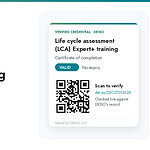
The certificate recognises completion of the DEISO training programme and the associated assessment. It is not a formal accreditation, and DEISO is not a certification or verification body.
Participants may choose to take an optional examination after completing the training. The assessment covers understanding of greenhouse gas accounting principles, emissions inventory development, and verification methodologies.
The examination focuses on the ability to:
- Interpret and evaluate organisational GHG inventories
- Assess Scope 1, Scope 2, and Scope 3 emissions calculations
- Review emissions data sources, documentation, and traceability
- Identify inconsistencies and methodological issues in emissions reporting
- Apply structured verification principles and review procedures
The option is open to participants attending remote, on-site, or off-site sessions. Examination and certificate fees are charged separately.
Career path opportunities
The programme builds capability in greenhouse gas accounting review, emissions inventory evaluation, and climate reporting assessment. Participants may apply these competencies in roles such as:
- GHG inventory reviewer — evaluate greenhouse gas inventories prepared by organisations and assess data quality, methodological consistency, and completeness of reported emissions
- Carbon accounting specialist — support organisations in reviewing Scope 1, Scope 2, and Scope 3 emissions calculations and improving internal carbon accounting practices
- Climate reporting analyst — assist sustainability and ESG teams in evaluating emissions disclosures and strengthening the credibility of climate-related reporting
- Environmental verification professional — review emissions documentation, assess calculation methodologies, and identify risks or inconsistencies in reported emissions data
- Sustainability consultant — advise organisations on greenhouse gas reporting systems, emissions accounting frameworks, and improvements to carbon management practices
Why choose DEISO for GHG verification training
DEISO runs specialised professional training in sustainability, life cycle assessment, and greenhouse gas management.
The training is built and run by experienced sustainability professionals with expertise in environmental assessment methodologies and industrial sustainability analysis.
Organisations that have taken part in DEISO training programmes include companies and institutions across the energy, industrial, and academic sectors.
Dr. Mahdi Ikhlayel, PhD
Dr. Mahdi Ikhlayel is the Director of Research and Development at DEISO, Japan, and the lead expert consultant and trainer behind DEISO’s sustainability and Life Cycle Assessment training programs.
He holds a PhD in Sustainability Science from The University of Tokyo, and combines academic research with industry consulting experience in environmental sustainability, life cycle assessment, and environmental systems analysis.
With more than 13 years of professional experience, Dr. Ikhlayel has worked across academia and industry, including research roles at Tohoku University and Ritsumeikan University in Japan, alongside consulting roles in the United States.
His expertise covers greenhouse gas accounting across Scopes 1–3, carbon footprint analysis, life cycle assessment, circular economy strategies, environmental impact assessment, and sustainability analytics.
He also contributes to the scientific community as a peer reviewer for leading international journals, including Journal of Cleaner Production, Resources, Conservation & Recycling, and Waste Management.
Authority highlights
- 13+ years in greenhouse gas accounting, LCA, and sustainability consulting
- PhD in Sustainability Science — The University of Tokyo
- Director of Research & Development — DEISO, Japan
- Former researcher — Tohoku University and Ritsumeikan University
- International consulting experience — Japan and the United States
- Reviewer for leading environmental science journals

Share this:
- Email a link to a friend (Opens in new window) Email
- Share on LinkedIn (Opens in new window) LinkedIn
- Share on X (Opens in new window) X
- Share on Facebook (Opens in new window) Facebook
- Share on WhatsApp (Opens in new window) WhatsApp
- Share on Reddit (Opens in new window) Reddit
- Print (Opens in new window) Print
- More