

Social Life Cycle Assessment (S-LCA) consulting
ISO 14075 S-LCA projects executed by DEISO — integrating social responsibility into life cycle sustainability strategy
Follows ISO 14075:2024, applying the UNEP Guidelines for Social Life Cycle Assessment (2020), modelled in openLCA.
DEISO: Tokyo-based Social Life Cycle Assessment consultancy executing S-LCA projects worldwide
DEISO LLC (合同会社DEISO) is a sustainability consulting firm headquartered in Tokyo, Japan, that executes Social Life Cycle Assessment (S-LCA) projects for companies in Japan, Asia, the Middle East and Europe. Following ISO 14075:2024 and the UNEP Guidelines (2020), we scope the study, map the supply chain, build the model in openLCA with PSILCA or SHDB social risk data and site-specific supplier data, and produce a report that shows where social risk sits in your value chain, for due diligence, ESG reporting and sourcing decisions.
- Company
- DEISO LLC (合同会社DEISO), sustainability and life cycle assessment consulting
- Headquarters
- Level 21, Shiodome Shibarikyu Building, 1-2-3 Kaigan, Minato-ku, Tokyo 105-0022, Japan
- Execution
- Japan and international projects, run remotely or on site
- Standard
- ISO 14075:2024, applying the UNEP Guidelines for Social Life Cycle Assessment (2020) and the UNEP Methodological Sheets for indicators
- S-LCA scope
- Screening and full S-LCA, comparative and multi-product S-LCA, supplier social risk assessment, social hotspot analysis
- Stakeholders
- Workers, local communities, value chain actors, consumers and society
- System boundaries
- Gate-to-gate, cradle-to-gate and cradle-to-grave
- Software
- openLCA
- Social data
- PSILCA and SHDB country- and sector-level social risk data, combined with site-specific supplier data
- Regulatory context
- Supports due diligence and reporting under the EU CSDDD, CSRD and ESRS S1–S4, Germany’s Supply Chain Act (LkSG) and Japan’s human rights due diligence guidelines
- Industries
- Renewable energy and infrastructure, manufacturing, electronics, construction materials, food and agriculture, consumer goods, automotive and mobility, extractives and raw materials
- Team
- Led by Dr. Mahdi Ikhlayel, PhD in Sustainability Science (University of Tokyo)
- Outputs
- S-LCA technical report, social hotspot and risk mapping, executive summary, ESG and due diligence integration support
- Contact
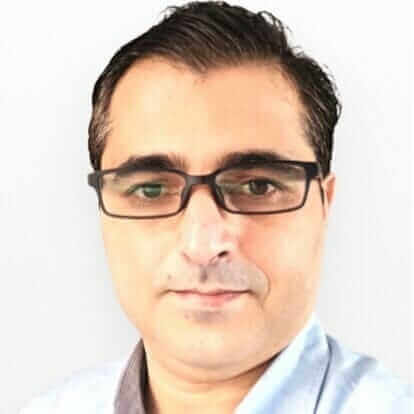
Dr. Mahdi Ikhlayel, PhD, Sustainability Science
Sustainability Director, Sustainability OS Architect & Technical Execution
Every engagement DEISO runs is technically directed, quality-assured, and methodologically governed by Dr. Ikhlayel — a senior sustainability scientist with over a decade of applied practice across LCA, GHG, PCF, and EPD.
125+
Publications reviewed
15+
International journals
35+
Countries reached
12+
LCA studies conducted in research and industry
1,000+
Hours of LCA advisory and training
Work that has reached Saudi Aramco, PETRONAS, Saudi Energy, WWF, Seedstars, NTU Singapore, UDST Qatar, and Seoul National University — across industry and academia in 35+ countries. View all clients →
View technical direction →Environmental LCA alone no longer covers your sustainability risk
For more than two decades, organisations have relied on environmental LCA to measure carbon footprints, resource use, and environmental impacts across product systems. Environmental LCA is essential — but it does not tell the full sustainability story.
A product with a low carbon footprint can still be produced under unsafe labour conditions, depend on suppliers with weak human rights practices, disrupt local communities, and expose your organisation to reputational and regulatory risk.
Investors, regulators, and customers now expect visibility into how products are made, not just how much they emit. This is where Social Life Cycle Assessment becomes strategic — it evaluates the social and socio-economic impacts embedded within supply chains and product systems.
What S-LCA evaluates
S-LCA is a structured methodology for evaluating the social and socio-economic impacts of a product’s life cycle. While environmental LCA measures emissions and resource use, S-LCA examines how business activities affect people — workers, communities, consumers, and other stakeholders across the supply chain.
It gives structured visibility into labour conditions and worker rights, health and safety performance, community well-being, supply chain social risk exposure, and socio-economic value creation. S-LCA turns social responsibility from qualitative statements into structured, decision-support information.
Why S-LCA matters now
Sustainability expectations have shifted. Carbon disclosure is no longer sufficient. Investors, regulators, and customers increasingly scrutinise how companies manage social risk within their value chains. Environmental metrics show performance — social metrics reveal exposure.
Organisations face growing pressure from ESG reporting frameworks requiring social transparency, supply chain due diligence regulations, investor scrutiny on human rights risk, procurement requirements from multinational buyers, and public exposure through digital transparency.
A single supplier-related incident — labour violations, unsafe conditions, or governance failures — can create reputational and financial consequences that outweigh environmental regulatory risks. S-LCA gives structured visibility into these vulnerabilities and helps organisations move from reactive response toward proactive risk management.
Stakeholder groups and indicators
S-LCA does not assess society in abstract terms. It evaluates specific stakeholder groups, across defined life cycle stages, using structured social indicators — keeping analysis measurable, comparable, and decision-relevant.
- Health and safety
- Fair wages
- Working hours
- Freedom of association
- Non-discrimination
- Access to resources
- Community engagement
- Local employment
- Socio-economic development
- Fair competition
- Responsible procurement
- Supplier transparency
- Product safety
- Transparency
- Ethical marketing
- Economic contribution
- Corruption prevention
- Governance practices
Gate-to-gate, cradle-to-gate, cradle-to-grave
One of the most important decisions in S-LCA is defining the system boundary. The boundary determines which life cycle stages are included, which stakeholders are evaluated, how far upstream and downstream the analysis extends, and the level of data depth required.
Gate-to-gate — a specific production stage or facility. Useful for assessing a manufacturing plant, evaluating Tier 1 suppliers, performing targeted screening, or supporting procurement decisions. Often the starting point for organisations building social due diligence capacity.
Cradle-to-gate — from raw material extraction to the finished product leaving the factory. Covers upstream supply chain stages, direct and indirect suppliers, and raw material sourcing. Used for mapping social hotspots in upstream supply chains, supporting ESG disclosure, and evaluating responsible sourcing strategies.
Cradle-to-grave — the full life cycle, from raw material extraction to end-of-life. Includes use-phase impacts, consumer safety considerations, and end-of-life socio-economic effects. The widest boundary and the most resource-intensive.
DEISO helps clients select a boundary that balances accuracy, feasibility, and decision value. Not every organisation needs cradle-to-grave analysis immediately. A structured gate-to-gate implementation is often the most effective starting point.
How DEISO executes S-LCA
A Social Life Cycle Assessment requires structured modelling, disciplined data management, and strategic interpretation. DEISO executes S-LCA as a professional consulting engagement, not a generic reporting exercise. Every project follows a defined analytical pathway:
- Goal and scope definition — study objectives, stakeholder prioritisation, system boundary selection, functional unit definition
- Indicator selection and mapping — alignment of stakeholder groups with relevant social impact categories and measurable indicators
- Supply chain mapping — identification of direct and indirect suppliers, risk regions, and data availability levels
- Social life cycle inventory — structured data collection from company records, supplier disclosures, international risk databases, and sector benchmarks
- Hotspot and risk analysis — identification of high-risk geographies, critical suppliers, and priority intervention areas
- Interpretation and strategic integration — translation of findings into procurement strategies, ESG reporting inputs, risk mitigation roadmaps, and executive-level recommendations
DEISO uses a structured modelling environment that keeps system logic transparent, results reproducible, documentation clear, and methodology transferable — so the work integrates with your existing sustainability workflows and builds internal capability over time.
What you receive
DEISO structures every S-LCA project around tangible, implementation-oriented outputs that executives and sustainability teams can act on immediately:
- S-LCA technical report — goal and scope definition, system boundary description, stakeholder mapping, indicator selection rationale, inventory data sources, risk and hotspot analysis, and interpretation
- Social hotspot and risk mapping — visual outputs identifying high-risk supplier regions, priority stakeholder concerns, critical intervention points, and comparative supplier risk levels
- Executive-level strategic summary — a concise decision brief covering key exposure areas, risk severity ranking, recommended mitigation pathways, and a short-, medium-, and long-term action roadmap
- ESG and due diligence integration support — embedding S-LCA findings into ESG reporting frameworks, sustainability disclosures, responsible sourcing programmes, and human rights due diligence processes
- Organisational capacity building (optional) — internal workshops, sustainability team sessions, methodology transfer, and supplier engagement guidance to make S-LCA an ongoing capability rather than a one-time study
Why invest in S-LCA
A professionally executed S-LCA reduces social risk exposure, strengthens ESG credibility, improves investor confidence, structures supplier governance, and strengthens long-term brand resilience. It shifts sustainability from narrative to measurable management. Specific outcomes include:
- Defensible ESG reporting — grounding the social pillar in structured analysis rather than general statements, for example a documented assessment of worker safety, wage risk, and supplier governance aligned to the product or system boundary
- Reduced social risk exposure in the supply chain — identifying where the highest risks sit before they become incidents, supporting targeted supplier engagement, reviews, or sourcing alternatives
- Human rights due diligence readiness — moving from ad hoc supplier checks to a structured assessment approach that supports evolving regulatory expectations
- Stronger procurement decisions — comparing sourcing options on social performance signals, not cost alone
- Prioritised action and budget — focusing resources on the biggest social hotspots rather than spreading effort thinly
- Improved stakeholder confidence — credible, structured answers for investors, customers, and partners on social performance
- Reputation protection and social licence to operate — proactively identifying and addressing social issues that could otherwise become public incidents
Who S-LCA is for
S-LCA is relevant wherever supply chains, labour conditions, sourcing regions, or stakeholder exposure create social risk. It is particularly valuable in sectors with global multi-tier supply chains, labour-intensive production, raw material sourcing from high-risk regions, strong ESG scrutiny, or public-facing brand exposure.
High-impact sectors include renewable energy and infrastructure, manufacturing and industrial production, electronics and technology, construction materials, food and agriculture, consumer goods, automotive and mobility, and extractives and raw materials.
S-LCA supports decisions across the organisation — for Chief Sustainability Officers strengthening ESG reporting and due diligence readiness; Procurement Directors prioritising supplier engagement based on social risk; Risk and Compliance Leaders preparing for emerging human rights regulations; CEOs and Board Members understanding enterprise-level exposure and governance risk; and ESG and Reporting Teams integrating structured social indicators into disclosures.
Organisations typically engage DEISO when they need to evaluate the social exposure of a flagship product, screen suppliers before long-term contracts, prepare for human rights due diligence regulation, strengthen ESG credibility with investors, identify social hotspots in renewable energy projects, or support responsible sourcing initiatives.
Why organisations choose DEISO
Choosing the right S-LCA partner is not only about technical capability. It is about strategic alignment, methodological rigour, and decision-focused execution.
- Specialised expertise in life cycle thinking — DEISO operates at the intersection of LCA, social risk analysis, ESG integration, supply chain governance, and execution-based capacity building
- Strategic, not generic, risk analysis — beyond country-level risk databases, with supplier-level evaluation, stakeholder-relevant indicators, and risk mapping across defined system boundaries
- Integrated execution and capacity building — DEISO supports internal capability development, executive-level understanding, methodology transfer, and progressive scaling of S-LCA scope
- Global perspective with technical precision — operating across international markets, DEISO balances technical depth, strategic clarity, and practical implementation feasibility
- Decision-oriented outputs — every engagement is structured around clear risk visualisation, supplier insights, executive-ready summaries, and governance integration pathways
DEISO produces Social Life Cycle Assessment as an integrated sustainability execution service — not a generic assessment exercise. The objective is simple: convert social sustainability from abstract responsibility into measurable enterprise outcomes.
How the engagement runs
DEISO engages clients through a structured, outcome-oriented pathway built to reduce uncertainty and accelerate implementation:
- Step 1 — initial scope discussion — clarifying the product or system under evaluation, industry-specific risk exposure, regulatory context, desired system boundary, and timeline and reporting objectives
- Step 2 — scope and proposal definition — clearly defined system boundaries, stakeholder and indicator framework, data requirements outline, timeline and milestone structure, and a transparent engagement structure
- Step 3 — execution and reporting — structured implementation including supply chain mapping, indicator analysis, hotspot identification, risk prioritisation, and executive-level interpretation, with outputs tailored for strategic decision-making
- Step 4 — integration and capacity support (optional) — executive briefings, sustainability team workshops, methodology transfer, and progressive expansion of scope so S-LCA becomes embedded in governance systems
Move from social risk exposure to structured social evidence
If your organisation is preparing for due diligence regulation, strengthening ESG credibility, evaluating supplier social exposure, or building responsible sourcing programmes, a structured S-LCA is a strategic next step.
Engage DEISO to define your S-LCA boundary, identify your highest social risk exposure, and build defensible social sustainability evidence.
DEISO S-LCA plans and pricing
Four plans for single-product, comparative and multi-product Social Life Cycle Assessment under ISO 14075. Every plan is modelled in openLCA and runs on DEISO’s own cloud platform.
DEISO Grid and DEISO Drive are included in every plan: follow your project, share files securely and give your whole team access to the results.
DEISO S-LCA Basic
From USD 9,500 per single-product screening studyA fast, credible screening of country and sector social risk to find your hotspots.
Request a Basic quotation →DEISO S-LCA Pro
From USD 21,000 per single-product ISO 14075 studyA full ISO 14075 S-LCA with supplier data, all five stakeholder categories and regulatory mapping.
Request a Pro quotation →DEISO S-LCA Expert
From USD 34,000 per single-product ISO 14075 studyPro plus openLCA model files, team training, reuse for new products and after-report support.
Request an Expert quotation →DEISO S-LCA Expert+
From USD 49,500 for up to 3 products or supplier optionsComparative, multi-product and sourcing studies, with the full Expert handover.
Request an Expert+ quotation →Compare plans
Select any feature name to read what it includes.
| Feature | BasicFrom USD 9,500 | ProFrom USD 21,000 | ExpertFrom USD 34,000 | Expert+From USD 49,500 |
|---|---|---|---|---|
| Scope | ||||
Study type?The depth of the study. Basic is an S-LCA screening; Pro and Expert are full S-LCAs under ISO 14075:2024; Expert+ is a comparative or multi-product S-LCA, including supplier and sourcing comparisons. | S-LCA screening | Full S-LCA (ISO 14075) | Full S-LCA (ISO 14075) | Comparative or multi-product S-LCA |
Products or options covered?The number of products, supplier options or sourcing options assessed in one study. Studies covering more than 3 are quotation based. | 1 | 1 | 1 | Up to 3 |
Typical timeline?Counted from receipt of complete project data, including supplier responses. Supplier data collection is usually the longest step. | 1 month | 2–3 months | 2–4 months | 3–5 months |
Industries supported?DEISO carries out S-LCAs across renewable energy and infrastructure, manufacturing and industrial production, electronics and technology, construction materials, food and agriculture, consumer goods, automotive and mobility, and extractives and raw materials. | ||||
| Standards and method | ||||
ISO 14075:2024?The international standard for social life cycle assessment of products. Full studies conform to it; the Basic screening follows its framework at screening level. | Aligned (screening) | Conforms | Conforms | Conforms |
UNEP S-LCA Guidelines (2020) and Methodological Sheets?Applied for stakeholder categories, subcategories and indicators within the ISO 14075 framework. | ||||
Stakeholder categories covered?Workers, local communities, value chain actors, consumers and society. Basic covers the categories most relevant to your product; full studies cover all five. | Priority categories | All 5 | All 5 | All 5 |
Activity variable (worker hours)?Social risks are weighted by the worker hours behind each process, so results reflect where labour actually sits in the supply chain. | ||||
| System boundaryBasic covers one boundary per study. Pro, Expert and Expert+ set the boundaries to your goal and scope. | ||||
Gate-to-gate?A specific production stage or facility. Useful for assessing a plant, evaluating Tier 1 suppliers or targeted screening. | ||||
Cradle-to-gate?From raw material extraction to the finished product leaving the factory, covering upstream suppliers and raw material sourcing. | ||||
Cradle-to-grave?The full life cycle, including use-phase and end-of-life social effects. The widest and most resource-intensive boundary. | ||||
| Data and modelling | ||||
Professional foreground data collection?DEISO collects your foreground data using a structured Excel data collection template and framework, with guidance and validation checks built in, so the data is complete, consistent and traceable. | Key foreground inputs | Full foreground data | Full foreground data | Full foreground data, up to 3 products |
Social risk database (PSILCA or SHDB)?Country- and sector-level social risk data from PSILCA or the Social Hotspots Database (SHDB), selected for your product and supply regions. | ||||
Site-specific supplier data?Structured questionnaires and follow-up with your suppliers, replacing generic country and sector risk with supplier-level evidence. | Up to 5 suppliers | Up to 5 suppliers | Up to 10 suppliers | |
LCA software?Every DEISO S-LCA is modelled in openLCA, which is free to use, so your team can open the model without a licence fee. | openLCA | openLCA | openLCA | openLCA |
Expert-built S-LCA models?Every model is built, calculated and checked by DEISO practitioners. AI supports visualisation and insight only; it never generates or alters your results. | ||||
Data quality assessment?A structured review of the reliability, completeness and representativeness of the social data behind your results. | ||||
| Impact assessment and analysis | ||||
Country and sector risk screening?Identifies the countries and sectors in your supply chain with the highest social risk. | ||||
Social hotspot and risk mapping?Visual mapping of high-risk supply regions, priority stakeholder concerns and critical intervention points. | ||||
Supplier risk ranking?Compares your suppliers on social risk levels, so engagement and audits go where they matter most. | ||||
Sensitivity analysis?Tests how the results change when key assumptions and data vary, showing how stable the conclusions are. | ||||
Scenario analysis?Compares alternative sourcing, supplier or design choices on their social risk profile. | Up to 2 scenarios | Up to 2 scenarios | Extended sourcing scenarios | |
| Regulation and due diligence | ||||
Regulatory mapping?Maps your results to the EU CSDDD, CSRD and ESRS S1–S4, Germany’s Supply Chain Act (LkSG) and Japan’s human rights due diligence guidelines. | ||||
Human rights due diligence input pack?Findings structured as input for your due diligence process: risk identification, prioritisation and suggested actions. | ||||
| Results and reporting | ||||
S-LCA report?A written report documenting goal and scope, stakeholder mapping, indicator rationale, data sources, hotspot and risk analysis and interpretation. | Screening report | ISO 14075-structured report | ISO 14075-structured report | ISO 14075-structured report |
Executive summary?A concise decision brief covering key exposure areas, risk severity ranking and a short-, medium- and long-term action roadmap. | ||||
Professional results presentation?Results presented in clear, publication-quality charts, maps and tables. | ||||
Full results Excel workbook?All results in a structured Excel workbook, ready for your own analysis and reporting. Results only; model files are part of Expert and Expert+. | ||||
Report revision rounds?Rounds of revisions to the draft report based on your comments. | 1 | 2 | 2 | 3 |
Results walkthrough session?A live session at the end of the study to walk your team through the results and what they mean. | ||||
| DEISO cloud platform | ||||
DEISO Visly?DEISO’s visual storytelling platform. It turns your S-LCA into clear supply chain and risk diagrams, with AI-supported insights from DEISO AI that explain what the results mean. | ||||
| Training, handover and support | ||||
Model files handed over?You receive the openLCA model files, so your team can open, run and update the model. | ||||
Training on S-LCA methodology?Training on ISO 14075, the UNEP Guidelines, stakeholder categories, indicators and interpretation, so your team can understand, explain and defend the results. Trainees are trained as one group. | Up to 2 trainees | Up to 3 trainees | ||
Training on openLCA?Hands-on openLCA training built around your own model, so your team can open it, run it and update it themselves. | Up to 2 trainees | Up to 3 trainees | ||
Training to reproduce and reuse the model?Step-by-step training on rebuilding your model and adapting it to a new product, supplier or sourcing region. | Up to 2 trainees | Up to 3 trainees | ||
After-report support?After the final report, the team answers questions, explains results and helps apply the model, within the period and hours shown, whichever limit is reached first. | 1 month, up to 10 hours | 2 months, up to 15 hours | ||
Additional support hours?Extra support hours can be added at any point, on request. | Available | Available | Available | Available |
Upgrade credit to Pro?The Basic fee is credited toward Pro if you upgrade within an agreed period. | ||||
Confidentiality?An NDA is available for every plan. | ||||
- Prices are starting prices. Studies covering more than 3 products or supplier options are quotation based.
- Timelines are counted from receipt of complete project data, including supplier responses; supplier data depends on your suppliers’ cooperation.
- Social database licence costs (PSILCA or SHDB) are confirmed in your quotation.
- openLCA is free to use, so handed-over models need no software licence.
- Training is run for the trainees as one group.
Social Life Cycle Assessment with DEISO: frequently asked questions
What does DEISO do in Social Life Cycle Assessment?
DEISO is a Tokyo-based consulting firm that executes Social Life Cycle Assessment (S-LCA) projects. We scope the study, map the supply chain, collect company and supplier data, model the product system in openLCA with PSILCA or SHDB social risk data, and produce a report that shows where social risk sits in the value chain, for due diligence, ESG reporting and sourcing decisions.
Which standard does DEISO follow for S-LCA?
DEISO S-LCA studies follow ISO 14075:2024, the international standard for social life cycle assessment of products, applying the UNEP Guidelines for Social Life Cycle Assessment (2020) and the UNEP Methodological Sheets for stakeholder categories and indicators.
What is the difference between S-LCA and environmental LCA?
Environmental LCA measures emissions, resource use and environmental impacts across a product's life cycle. S-LCA uses the same life cycle perspective to assess how the product system affects people: workers, local communities, value chain actors, consumers and society.
Which software and social databases does DEISO use?
DEISO models every S-LCA in openLCA, using country- and sector-level social risk data from PSILCA or the Social Hotspots Database (SHDB), combined with site-specific data collected from your company and suppliers.
Which stakeholder groups does an S-LCA cover?
An S-LCA covers five stakeholder categories: workers, local communities, value chain actors, consumers and society. Indicators include health and safety, fair wages, working hours, freedom of association, community engagement, fair competition, product safety and corruption prevention.
Can an S-LCA support CSDDD, CSRD and human rights due diligence?
Yes. An S-LCA identifies and prioritises social risks across the supply chain, which is structured input for human rights due diligence and for social disclosures under the EU CSDDD, CSRD and ESRS S1 to S4, Germany's Supply Chain Act (LkSG) and Japan's human rights due diligence guidelines.
How much does an S-LCA with DEISO cost?
DEISO S-LCA plans start from USD 9,500 for a Basic screening, USD 21,000 for a Pro full ISO 14075 study, USD 34,000 for Expert, which adds openLCA model handover, training and support, and USD 49,500 for Expert+ comparative or multi-product studies covering up to 3 products or supplier options. Larger studies are quotation based. See the plan comparison.
How long does an S-LCA take?
A Basic screening typically takes 1 month and a full study 2 to 4 months, counted from receipt of complete project data. Comparative and multi-product studies typically take 3 to 5 months. Supplier data collection is usually the longest step.
How do I start an S-LCA project with DEISO?
Send a short description of the product or supply chain, the purpose of the study and any existing supplier data to or through the quotation form. DEISO replies with scoping questions and a proposal covering scope, boundary, stakeholders, timeline and outputs.
Start with Mirai, DEISO’s AI guide
Describe your objective or project to identify the right execution path.
Mirai guides you to the most relevant next step — from execution and technical review to verification readiness and sustainability operating system delivery.
How to use DEISO Mirai