

Scope 3 emissions and product carbon footprint (PCF)
Practical Scope 3 value-chain accounting and product carbon footprint analysis on the GHG Protocol framework — instructor-led, for sustainability professionals, engineers and consultants.Training price
Transparent pricing for remote training, with options for certification and other formats.
A certificate recognises completion of the training, not formal accreditation.
Examination and certification are optional and carry an additional fee.
On-site and off-site training are quotation-based and available on request.
About this training program
Professional training in Scope 3 value-chain emissions accounting and product carbon footprint (PCF) development, built on internationally recognised carbon accounting frameworks.
The program equips sustainability professionals, engineers, consultants, and researchers with the practical capability to quantify, analyse, and interpret Scope 3 emissions and product carbon footprints across complex supply chains.
It focuses on the real-world methodologies organisations use to quantify value-chain emissions, collect supplier data, manage uncertainty, and align emissions reporting with global climate disclosure frameworks.
The program is particularly relevant for organisations conducting Scope 3 assessments or developing product carbon footprints in support of sustainability reporting and climate strategy.
Training duration
Total duration is 18 hours. The training can be run as:
- One week of consecutive sessions across five business days
- Structured sessions spread across multiple weeks
- Intensive short-format sessions, depending on scheduling needs
Training delivery options
Instructor-led online sessions run through a live virtual classroom.
The price shown on this page applies to remote training only.
Training run directly at the client’s facilities, anywhere worldwide.
Pricing is higher than remote and quotation-based, depending on:
- Location
- Number of participants
- Travel requirements
- How far the content is shaped to the client
Training run in Japan in a dedicated learning environment.
Pricing is quotation-based and higher than remote training, depending on the configuration and number of participants.
Training curriculum
The curriculum centres on the practical implementation of Scope 3 emissions accounting and product carbon footprint methodologies. The major modules are below.
Foundations of value-chain carbon accounting
- Greenhouse gas terminology and definitions
- Corporate value-chain versus product carbon footprints
- Upstream and downstream emissions boundaries
- Emissions sources across the value chain
GHG Protocol framework
- Structure of the GHG Protocol Scope 3 Standard
- The GHG Protocol Product Standard for product carbon footprints
- How Scope 3 inventories and product footprints connect
Scope 3 emissions framework
An overview of the 15 Scope 3 categories, including:
- Purchased goods and services
- Capital goods
- Transportation and distribution
- Waste generated in operations
- Business travel
- Employee commuting
- Use of sold products
- End-of-life treatment of sold products
Participants learn how to work out which Scope 3 categories are relevant to their own organisation.
Scope 3 data collection strategies
- Supplier engagement approaches
- Primary versus secondary emissions data
- Spend-based versus activity-based calculations
- Hybrid emissions calculation approaches
Product carbon footprint (PCF)
- Introduction to product carbon footprints
- System boundary definition
- Functional units
- Life cycle based carbon accounting
- Allocation approaches
Emission factors and data sources
- Global emission factor databases
- Regional emission factors
- Selecting appropriate emission factors
- Managing data gaps and uncertainty
Carbon footprint calculation methods
- Activity-based calculation methods
- Spend-based emissions modelling
- Hybrid carbon accounting approaches
- Carbon intensity metrics
Data quality and data management
- Emissions data validation
- Documentation and traceability
- QA and QC procedures
- Scope 3 and PCF data management practices
Carbon reporting and disclosure
- Preparing Scope 3 emissions reports
- Emissions documentation practices
- Communicating Scope 3 and PCF results
- Preparing for climate disclosures
Frequently asked questions
What this Scope 3 and product carbon footprint training covers, who it is built for, which standards it references, and how sessions are run.
Expected outcomes
Participants completing this training will be able to:
- Develop Scope 3 emissions inventories aligned with the GHG Protocol Scope 3 Standard
- Calculate emissions across the Scope 3 categories relevant to their organisation
- Design supplier data collection strategies
- Estimate product carbon footprints
- Evaluate emissions data quality and methodological consistency
- Interpret Scope 3 and PCF results for sustainability decision-making
Who this training is for
The programme is built for professionals involved in value-chain emissions accounting, product carbon footprints, sustainability reporting, and supply chain emissions analysis. It is particularly relevant for individuals responsible for developing, reviewing, or managing Scope 3 inventories, product carbon footprints and climate reporting work.
Typical participants include:
- Sustainability and ESG managers
- Climate reporting and carbon accounting professionals
- Environmental engineers
- Procurement and supply chain sustainability specialists
- Sustainability consultants and advisory professionals
- Researchers and graduate students working on climate and emissions analysis
The training is relevant across sectors including manufacturing, energy, chemicals, electronics, construction, and industrial supply chains.
Career path opportunities
Professionals completing this training may apply their skills in roles such as:
- Scope 3 accounting specialist — develop and manage Scope 3 emissions inventories
- Climate reporting analyst — support climate disclosure and sustainability reporting work
- Supply chain sustainability specialist — evaluate emissions across supplier networks and value chains
- Product carbon footprint analyst — develop and analyse product-level carbon footprints
- Sustainability consultant — advise organisations on Scope 3 and product carbon footprint strategies and emissions reduction planning
Methodological standards covered
DEISO is not a certification or verification body. The training covers how these frameworks are applied, interpreted, and reviewed.
The training references internationally recognised greenhouse gas accounting frameworks including:
- GHG Protocol — Scope 3 Standard
- GHG Protocol — Product Standard
- ISO 14067 — carbon footprint of products
- Life cycle based methods — life cycle based carbon accounting methodologies
Training formats
The programme can be run in several formats depending on organisational needs.
Instructor-led online sessions run through a live virtual classroom environment.
The price shown on this page applies only to remote training.
Remote sessions allow flexible scheduling and participation from multiple locations.
Training run directly at the client’s facilities.
On-site sessions let organisations tailor the programme to their own supplier data, product portfolios, and operational contexts.
Pricing is quotation-based and higher than remote training, depending on the location, number of participants, and travel requirements.
Training run in Japan in a dedicated learning environment.
This format is often chosen by organisations seeking an intensive setting with focused learning sessions.
Pricing is quotation-based and higher than remote training, depending on the training configuration and number of participants.
Certification option
The certificate recognises completion of the DEISO training programme and the associated assessment. It is not a formal accreditation, and DEISO is not a certification or verification body.
Participants may choose to take an optional examination after completing the training. The assessment covers understanding of:
- Value-chain carbon accounting principles
- Scope 3 emissions calculations
- Product carbon footprint methodologies
- Scope 3 and PCF documentation and data quality
The examination is optional and open to participants attending remote, on-site, or off-site sessions. Examination and certificate fees are charged separately.
Why choose DEISO for Scope 3 and PCF training
DEISO runs specialised training in environmental assessment, carbon accounting, and sustainability methodologies. The programmes are built to give practical and technically grounded knowledge aligned with internationally recognised frameworks.
Key advantages of the training include:
The training focuses on the practical application of Scope 3 and product carbon footprint frameworks and real-world emissions reporting challenges.
Examples and case studies reflect value-chain emissions challenges faced by organisations in sectors such as manufacturing, chemicals, energy, and industrial supply chains.
The training connects Scope 3 inventories with life cycle based carbon accounting and product carbon footprint development.
Participants receive direct instruction and guidance from an experienced specialist in environmental assessment and carbon accounting methodologies.
The programme emphasises practical implementation approaches rather than purely theoretical discussion, letting participants apply the knowledge in professional environments.
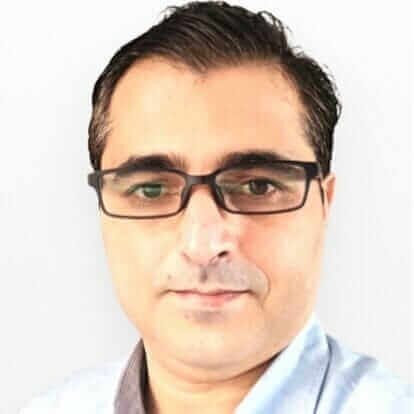
Dr. Mahdi Ikhlayel, PhD
Dr. Mahdi Ikhlayel is the Director of Research and Development at DEISO, Japan, and the lead expert consultant and trainer behind DEISO’s sustainability and Life Cycle Assessment training programs.
He holds a PhD in Sustainability Science from The University of Tokyo, and combines academic research with industry consulting experience in environmental sustainability, life cycle assessment, and environmental systems analysis.
With more than 13 years of professional experience, Dr. Ikhlayel has worked across academia and industry, including research roles at Tohoku University and Ritsumeikan University in Japan, alongside consulting roles in the United States.
His expertise covers greenhouse gas accounting across Scopes 1–3, carbon footprint analysis, life cycle assessment, circular economy strategies, environmental impact assessment, and sustainability analytics.
He also contributes to the scientific community as a peer reviewer for leading international journals, including Journal of Cleaner Production, Resources, Conservation & Recycling, and Waste Management.
Authority highlights
- 13+ years in greenhouse gas accounting, LCA, and sustainability consulting
- PhD in Sustainability Science — The University of Tokyo
- Director of Research & Development — DEISO, Japan
- Former researcher — Tohoku University and Ritsumeikan University
- International consulting experience — Japan and the United States
- Reviewer for leading environmental science journals
Share this:
- Email a link to a friend (Opens in new window) Email
- Share on LinkedIn (Opens in new window) LinkedIn
- Share on X (Opens in new window) X
- Share on Facebook (Opens in new window) Facebook
- Share on WhatsApp (Opens in new window) WhatsApp
- Share on Reddit (Opens in new window) Reddit
- Print (Opens in new window) Print
- More