More details

Help-DEISO Mirai™ AI Pro

Ask DEISO Mirai™ AI Proto Identify the Right DEISO Execution Path

Describe your objective, system need, compliance requirement, or project challenge, and Mirai AI will guide you toward the most relevant DEISO execution path.

Best use: use Mirai when you need structured direction across DEISO services, sustainability systems, technical execution, compliance pathways, review needs, or next-step decision support.

Mirai Documentation Portal

Access structured DEISO Mirai™ AI Pro documentation and release notes through DEISO’s dedicated documentation portal.

miraidocs.deiso.app
Meaning of Mirai

In Japanese, Mirai (未来) means “future.” The name reflects DEISO’s focus on sustainability intelligence, technical execution, and future-ready decision support.

Get Started

How to Use Mirai Effectively

Mirai works best when you describe the objective, context, and decision you need to make. Use the examples below as starting points for structured DEISO guidance.

1 Define the Execution Path

  • I need to reduce Scope 3 emissions — where do I start?
  • We want to build an LCA — what is the best approach?
  • How should we structure our sustainability project?

2 Solve Data & Technical Challenges

  • We have incomplete Scope 3 data — how do we handle gaps?
  • How should we structure LCI data collection?
  • Our ESG data is inconsistent — what should we do?

3 Navigate Compliance & Reporting

  • We need to comply with CSRD — what is the pathway?
  • How do we prepare for EPD or PCF submission?
  • What is required for Scope 3 disclosure?

4 Prepare for Review Readiness

  • We already have an LCA — do we need a review?
  • Check our carbon footprint model before submission.
  • Assess our sustainability data quality before disclosure.

5 Compare Solution Routes

  • Compare LCA execution, review, advisory, and audit-readiness support.
  • Which is better: Scope 3 review or full accounting?
  • What is the best DEISO approach for our situation?

6 Find Systems & Tools

  • How does the DEISO Sustainability Intelligence System work?
  • Which tools should we use for ESG, LCA, or reporting?
  • Can DEISO AI support our internal sustainability workflow?

7 Build Internal Capability

  • We need team training alongside implementation.
  • Compare openLCA, GaBi, and broader LCA training routes.
  • How can we build internal sustainability capability?

8 Move Toward Engagement

  • Start a sustainability project with DEISO.
  • Request technical evaluation for our case.
  • We are not sure where to begin — guide us.
Prompt Guidance

How to Ask Mirai

Start with a simple question or describe a complex sustainability challenge. Mirai can translate your input into structured execution paths, comparisons, and next steps across DEISO services, systems, and technical solutions.

1 Simple Questions

Use these when you want a quick definition, service overview, or basic explanation.

What sustainability services does DEISO offer?
What is Scope 3 emissions?
What is an EPD?
Explain LCA in simple terms.

2 Search & Navigation

Use these when you want Mirai to help locate DEISO services, tools, programs, or request routes.

Find DEISO services for carbon footprint.
Show me EPD-related services.
Find DEISO training programs.
Where can I request a technical evaluation?

3 Execution Path Guidance

Use these when you need Mirai to structure a project direction, service pathway, or next step.

We have a sustainability objective and need guidance to define the right execution approach, services, and next steps. Can you structure the recommended DEISO pathway?
We need sustainability solutions tailored to our industry, including execution, compliance, and technical implementation. What does DEISO recommend for our sector?
We are not sure where to start. Can you guide us to the right DEISO approach?
Suggest the best DEISO pathway based on our project goals.

4 Technical & Data Challenges

Use these when the issue involves data quality, LCA models, GHG data, carbon footprinting, or technical readiness.

We need to calculate and validate product carbon footprints for our products. What is the recommended DEISO approach and workflow?
We have existing sustainability data, LCA models, or reports. Can DEISO review and prepare them for verification or submission?
We have incomplete Scope 3 data. What should we do?
How do we improve our sustainability data quality?

5 Compliance & Reporting

Use these when the goal involves CSRD, EU Taxonomy, EPD, PCF, Scope 3 disclosure, or reporting readiness.

We need to align with CSRD and EU Taxonomy requirements. What services, systems, and steps should we implement to become compliant?
We need to develop EPDs aligned with EN 15804 and ensure our LCA models are compliant. What is the recommended DEISO execution process?
We need to assess and reduce Scope 3 emissions across our supply chain. What is the recommended DEISO execution approach and how should we structure the project?

6 Systems & Digital Solutions

Use these when the question involves sustainability systems, digital workflows, tools, or AI-enabled guidance.

What DEISO systems and digital solutions can support our sustainability data, reporting, and decision-making processes?
How does the DEISO Sustainability Intelligence System work?
Which tools should we use for ESG or LCA?

7 Training & Capacity Building

Use these when training is needed as a supporting layer for implementation or internal capability development.

We need to build internal capacity in LCA, GHG, or EPD. Which DEISO training programs align with our objectives?
Compare openLCA training versus GaBi training.

8 Advanced Complex Use Cases

Use these when the request combines several sustainability domains, countries, systems, or decision layers.

We operate across multiple countries and need Scope 3 reduction, ESG reporting, and product footprint modeling. Can you structure a phased DEISO execution plan?
We have LCA, ESG, and supply chain challenges combined. What is the best integrated DEISO approach?
We would like to request a technical evaluation for our sustainability project. Can you assess our needs and outline the appropriate DEISO scope and execution plan?
Advanced Use Cases

Advanced Ways to Use Mirai

Use Mirai when your sustainability question involves multiple pathways, unclear scope, data uncertainty, compliance pressure, or several DEISO service areas at once.

Translate Objectives into DEISO Guidance

  • Start with the objective: describe the sustainability challenge or reporting need.
  • Clarify the pathway: ask Mirai to map the need into execution, review, advisory, or system support.
  • Move toward action: request the next step, evaluation route, or recommended DEISO pathway.

Define the Right Execution Path

Mirai helps when the problem is clear but the service path is not. It can frame whether the next step should be project execution, technical review, advisory support, data improvement, digital systems, or a formal evaluation route.

Support Technical and Data Challenges

Use Mirai to frame incomplete data, methodology uncertainty, supplier-data gaps, LCA model concerns, reporting ambiguity, or sustainability data-quality issues before deciding the next technical action.

Guide Compliance and Readiness Pathways

  • Compliance direction: ask about CSRD, PCF, EPD, Scope 3, ESG, or reporting pressure.
  • Readiness logic: distinguish execution, review, audit readiness, or pathway clarification.
  • Submission preparation: explore documentation, model quality, and pre-submission improvement needs.

Compare Multiple Routes Before Deciding

When several valid paths exist, Mirai can compare execution, advisory support, technical review, data review, readiness assessment, and consultation routes so users understand why one pathway may fit better than another.

Navigate the DEISO Ecosystem Faster

  • Service discovery: locate the relevant DEISO service area.
  • Systems and tools: explore digital platforms and intelligence-system support.
  • Engagement routing: move toward evaluation, quotation, or expert discussion.

Explore Cross-Functional Sustainability Needs

Mirai is useful when Scope 3, LCA, ESG reporting, EPD preparation, supplier engagement, data governance, and internal systems are connected rather than separate. It helps decompose the situation into clearer DEISO pathways.

Start a More Serious DEISO Engagement

  • Project orientation: identify the right starting point before expanding scope.
  • Evaluation support: move toward technical evaluation when interpretation is needed.
  • Engagement readiness: turn an uncertain question into a clearer action path.
Global Guidance

Project-, Country-, and Compliance-Aware Guidance

Mirai can help frame sustainability questions using regional context, project type, technical maturity, industry conditions, and compliance pressure, then direct users toward the most relevant DEISO pathway.

How to Use This Capability

Ask Mirai about your country, market, sector, reporting obligation, product type, supply chain footprint, or organizational objective. The stronger the context, the better Mirai can structure the next step.

What Mirai Can Help Clarify

  • Project route: execution, review, advisory, audit-readiness, or system support.
  • Compliance direction: CSRD, EPD, PCF, Scope 3, ESG, or country-specific reporting pressure.
  • Data maturity: supplier data gaps, internal data quality, model readiness, and documentation gaps.
  • Next step: whether to start with evaluation, structured scoping, or direct DEISO support.

Context-Aware Example Prompts

Use these when the answer depends on country, market, industry, reporting framework, or cross-border operations.

Spain, industrial decarbonization: “We manufacture steel components in Spain and need to reduce Scope 1–3 emissions. What is the best DEISO execution path to start?”
France, EPD pathway: “We sell consumer packaging in France. Do we need EPD support, an underlying LCA, or a pre-submission review first?”
Saudi Arabia, implementation plus capability: “We are a supplier in Saudi Arabia and need both sustainability implementation support and internal capacity building. How should DEISO structure this?”
Japan, reporting and systems: “Our company in Japan needs help with carbon reporting and internal sustainability workflows. Should we start with advisory, execution, or a system-oriented approach?”
U.S. supply chain and EU exposure: “We operate from the U.S. but need to support CSRD-related demands across our supply chain. Which DEISO route fits this kind of cross-border compliance pressure?”
Kenya, sector and standards: “We are in the cement sector in Kenya and need to understand the right sustainability and technical pathway for future reporting and improvement.”
Brazil, institutional support: “We are an academic institute in Brazil and need structured sustainability support. Should we begin with training, technical advisory, or a broader DEISO engagement?”
Multi-country supply chain: “Help us identify the right DEISO path to reduce Scope 3 emissions across suppliers in Asia, Europe, and the Middle East.”
Industry-specific pathway: “Suggest the most suitable DEISO sustainability pathway for an electronics manufacturer dealing with ESG reporting, product footprint questions, and supplier data gaps.”
Multi-objective situation: “We need support across LCA, Scope 3, ESG reporting, and internal data governance in several countries. How should we structure the project and what should come first?”
Help Categories

Mirai Prompt Categories

Use these categories to understand what to ask Mirai, how to frame your request, and how to move from a broad sustainability need to a clearer DEISO execution path.

1 Execution Path Guidance

  • We have a sustainability objective but do not know the right DEISO pathway.
  • How should we structure our Scope 3, LCA, or ESG project?
  • What is the best DEISO starting point for this requirement?
  • Which execution route should come first for our situation?

2 Compare Options & Solution Routes

  • Compare execution, technical review, and advisory support for our project.
  • Should we start with a technical evaluation or a strategic consultation?
  • What is the difference between audit-readiness support and full execution?
  • Show the best DEISO options for our case in a structured comparison.

3 Technical, Data & Methodology Challenges

  • We have weak Scope 3 data. What DEISO route fits this problem?
  • How should we handle missing LCI or supplier information?
  • Our sustainability data is inconsistent. What should we do first?
  • We already have a model. Do we need improvement, validation, or review?

4 Country, Industry & Compliance Context

  • What DEISO pathway fits CSRD-related pressure across our international operations?
  • We are in France and need help with EPD-related work. Where do we start?
  • Suggest the best DEISO route for a manufacturer in Saudi Arabia or Japan.
  • How should we approach a multi-country Scope 3 or ESG challenge?

5 DEISO Services, Systems & Navigation

  • Find the right DEISO service for product carbon footprint or EPD support.
  • Help me find the correct DEISO page, system, form, or platform.
  • What digital or intelligence system does DEISO offer for this need?
  • Show the best DEISO page for technical review, data support, or advisory.

6 Training & Capacity Building

  • We need implementation plus internal team training. How should DEISO structure this?
  • Compare openLCA training with other DEISO training pathways.
  • Which DEISO training route fits beginners versus technical users?
  • How can training support a broader DEISO project rather than act as a standalone route?

7 Evaluation, Consultation & Next Steps

  • We are not sure where to begin. Guide us to the right next step.
  • Should we start with a technical evaluation for our challenge?
  • We are ready for a more serious DEISO discussion. What should we do next?
  • Help us move from uncertainty to a structured DEISO engagement path.

8 Help, Support & Human Escalation

  • What can Mirai help me do?
  • Show example prompts for project guidance and solution comparison.
  • I want to speak with a DEISO expert.
  • How can I contact DEISO for consultation or support?
Advanced Example Interactions

Complex Ways to Use Mirai

Use these examples when your request involves multiple objectives, countries, compliance pressures, existing technical work, or several DEISO pathways at once.

Example 1 — Cross-Border Product, Scope 3, and Compliance Program

Example prompt

We are an electronics manufacturer headquartered in Germany with suppliers in Malaysia and South Korea, and we plan to expand distribution into the Middle East. We need to reduce Scope 3 emissions, prepare EPDs for several product lines, strengthen ESG reporting, and understand how to structure the project in a way that supports CSRD and EU Taxonomy expectations. We also need to decide whether we should start with a technical evaluation, a multi-phase execution route, or a readiness review. Can you map the best DEISO pathways, compare the main options, and tell us what should come first?

What this tests

  • Multi-country supply-chain interpretation
  • Execution-path mapping across Scope 3, EPD, and ESG
  • Comparison between phased implementation routes
  • Compliance-aware project structuring and prioritization
Best for: users with several linked objectives who need Mirai to decompose the challenge and show structured next-step options.
Example 2 — Existing Study, Review Readiness, and Route Selection

Example prompt

We already completed an internal LCA and partial product carbon footprint model for a construction material, but we are not confident about the quality of supplier data, allocation choices, and whether the documentation is strong enough for external review or future EPD-related use. We are based in France, some data came from Turkey and Egypt, and our management wants to know whether DEISO should first provide technical review, pre-submission readiness support, model improvement support, or a broader execution correction route. Can you compare these options, explain the best use case for each one, and recommend the best DEISO starting point?

What this tests

  • Review-readiness and pathway differentiation
  • Technical quality concerns around models and documentation
  • Comparison logic across review, advisory, and correction pathways
  • Guidance for users with existing work, not only new projects
Best for: users who already have technical work and need Mirai to identify whether the next step is review, readiness support, improvement, or broader correction.
Example 3 — Sustainability System Design, Internal Capability, and Multi-Function Rollout

Example prompt

We are a regional manufacturing group operating in Japan, Saudi Arabia, and the UAE. We need a structured sustainability system that can support internal data governance, recurring Scope 1–3 reporting, management visibility, and future product-level work such as PCF or LCA. At the same time, our teams need internal capability development because technical knowledge is uneven across business units. We want to understand whether DEISO should support us through a sustainability intelligence system, data governance and internal control support, phased GHG execution, training as a supporting layer, or a combination of these. Please compare the possible DEISO routes and show how we should phase them.

What this tests

  • System-oriented guidance beyond single-service questions
  • Combination of execution, systems, governance, and training
  • Multi-country internal rollout and organizational maturity handling
  • Phased pathway comparison rather than one-step recommendation
Best for: users exploring DEISO as a broader execution, system, and capability-building partner.

DEISO Mirai™ AI Pro Release Notes & Change Log

Review Mirai product updates, interface changes, system improvements, known notes, and historical release entries in a standard software-style changelog format.

Product DEISO Mirai™ AI Pro
Current line v5.0 Preview Release
Status Active development / preview
Format Added, Improved, Changed, Fixed, Notes

Standard release-note categories

Added New user-facing capabilities, sections, flows, tools, or guidance features.
Improved Enhancements to clarity, routing, prompts, page guidance, or existing behavior.
Changed Adjusted wording, structure, navigation, logic, or interface-support behavior.
Fixed Corrections to broken links, inconsistency, unclear presentation, or logic issues.
Notes Platform constraints, known limitations, backend notes, or user guidance.
Version strategy: Current public development should be presented as v5.0 Preview Release. Older v4.x releases should appear below as historical archive entries.

Release Index

Jump directly to a specific Mirai release entry using the version list below.

Version navigator
Anchor pattern: this block uses clean future anchors such as #mirai-v4-2 while also supporting your current block IDs as fallback targets.

v4.3 — Platform Usability, Support, API, and UX Expansion

Historical release entry covering usability, support infrastructure, integration readiness, multilingual behavior, response stability, and DEISO execution-pathway alignment.

Version v4.3
Date April 19, 2026
Type Major platform upgrade
Status Historical archive

Added

  • Native Arabic language support with Right-to-Left direction for Arabic-speaking users.
  • Arabic support for both Mirai Mini and Mirai Full Screen.
  • Human support request option after repeated chat interactions.
  • Webhook support for external workflow automation.
  • Mirai AI Pro API support for integration with DEISO client platforms.
  • Basic support, WhatsApp support, and live chat support pathways.
  • Admin-side browser notifications.

Improved

  • Adaptive Mirai Mini height across mobile, tablet, laptop, and monitor screens.
  • Basic follow-up questions after responses.
  • Irrelevant-question handling to redirect users back to DEISO domain context.
  • Unified response footer behavior.
  • Clickable DEISO execution-pathway links after responses.
  • Mirai logo, symbol, and favicon presentation.

Fixed

  • Resolved a major response syntax rendering issue affecting output structure and readability.
  • Fixed an issue where some links in Mirai responses were not clickable.

Notes

  • This entry is retained as part of the historical v4.x release archive.
  • The current public development line remains DEISO Mirai™ AI Pro v5.0 Preview Release.
  • The Mirai chat interface itself is controlled by the backend/platform and is not modified by this WordPress page block.
Release summary: v4.3 improved multilingual usability, responsive behavior, support escalation, integration readiness, domain control, link behavior, and response reliability.

v4.2 — Contextual Intelligence, Improved Interface, and Execution Pathway Mapping

Historical release entry covering contextual intelligence, adaptive service selection, DEISO ecosystem pathway mapping, and the improved Home and Messages interface structure for Mirai Mini and Full Screen.

Version v4.2
Date April 17, 2026
Type Major intelligence and interface update
Status Historical archive

Added

  • Contextual intelligence layer: Added stronger interpretation of user objectives, project situations, operational context, and implementation challenges.
  • DEISO ecosystem mapping: Added dynamic mapping across DEISO services, training routes, systems, and technical solution pathways.
  • Adaptive service selection: Added logic to select more relevant DEISO pathways based on user goals, maturity, and execution requirements.
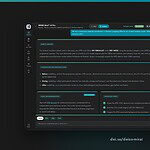
  • Improved Home and Messages interface: Added a clearer post-load interface structure for Mirai Mini and Mirai Full Screen, separating the Home view from message activity.
  • Persistent quick-action pathways: Added direct access to technical evaluation, quote requests, consultation booking, and DEISO navigation routes from the Mirai experience.

Improved

  • Client-aligned response logic: Improved how Mirai aligns responses with user objectives, operational workflows, and sustainability implementation needs.
  • Execution-pathway guidance: Improved conversion of broad sustainability challenges into practical execution pathways and recommended next steps.
  • System integration guidance: Improved Mirai’s ability to connect sustainability challenges with DEISO systems, workflows, and capability development routes.
  • Interface navigation clarity: Improved the distinction between Home and Messages to reduce ambiguity inside Mirai Mini and Full Screen.
  • Guided interface movement: Improved the user’s ability to move from chat interaction into DEISO service pathways through clearer interface access points.
  • Conversion support: Improved movement from Mirai interaction into high-priority DEISO engagement routes, including evaluation, quotation, consultation, and service discovery.

Changed

  • Response direction: Shifted Mirai further from generic assistant behavior toward client-aligned, execution-focused guidance.
  • Pathway selection behavior: Changed the response structure to prioritize relevant DEISO routes, implementation logic, and next-step clarity.
  • Interface access model: Changed the Mirai entry experience from a plain conversational entry toward a structured Home and Messages access model with clearer user routing.

Quick Access Links Introduced

Notes

  • This release is retained as part of the historical v4.x archive.
  • The current public development line should remain DEISO Mirai™ AI Pro v5.0 Preview Release.
  • This merged public release entry consolidates the previous separate v4.2 contextual-intelligence and interface materials into one standard changelog entry.
  • The interface screenshot/preview image was intentionally removed from the public changelog block to keep the release notes clean and easy to update.
  • The Mirai chat interface itself is controlled by the backend/platform and is not modified by this WordPress page block.
Release summary: v4.2 delivered contextual mapping, adaptive service selection, client-aligned response logic, an improved Home and Messages interface, persistent quick-action pathways, and clearer movement from user inquiry into practical DEISO execution pathways.

v4.1 — Structured Guidance, Scope Control, and DEISO Pathway Mapping

Historical release entry introducing stronger response architecture, DEISO scope control, option comparison, link discipline, built-in decision trees, and conversion-aware guidance across DEISO services, systems, and next-step pathways.

Version v4.1
Date April 17, 2026
Type System update
Status Historical archive

Added

  • Structured guidance layer: Added a more controlled response architecture for sustainability guidance inside the DEISO ecosystem.
  • Core identity and scope control: Added clearer positioning of Mirai as a DEISO execution-guidance and sustainability intelligence layer, not a generic chatbot.
  • Outside-scope redirect logic: Added firmer redirection for non-DEISO, non-sustainability, or generic assistant-style requests.
  • Option mapping logic: Added clearer mapping between user needs, possible solution routes, and DEISO next-step pathways.
  • Built-in decision trees: Added routing logic for LCA, Scope 3, ESG, compliance, data gaps, review needs, and advisory pathways.
  • Conversion-oriented routing: Added stronger direction toward consultation, evaluation, quotation, WhatsApp, email, and structured DEISO engagement routes.

Improved

  • Response architecture: Improved the answer sequence into clearer sections such as Direct Answer, Execution Paths, Comparison Table, DEISO Mapping, Get Started, and Footer.
  • Answer density: Improved execution-path explanations by requiring clearer descriptions of what each path is, what it solves, and the expected outcome.
  • Comparison logic: Improved Mirai’s ability to compare execution, review, advisory, data, consultation, and technical pathway options.
  • Comparison table discipline: Improved multi-option answers by enforcing structured comparison behavior when two or more routes are presented.
  • DEISO pathway mapping: Improved routing across DEISO services, systems, execution-support areas, and solution pathways.
  • Link rendering discipline: Improved consistency around how DEISO links are presented in structured responses.
  • Enterprise interaction control: Improved output predictability, readability, and engagement quality for project scoping, service discovery, and advisory direction.

Changed

  • Guidance behavior: Changed Mirai from a broader guidance assistant toward a structured execution-guidance system.
  • Routing emphasis: Changed response behavior to prioritize service relevance, pathway clarity, and next-step decision support.
  • Comparison format: Changed multi-option guidance toward a more standardized table logic with Path / Option, Description, Best Use Case, and DEISO Solution.
  • Closing flow: Changed generic closing behavior into a more controlled Get Started section that moves users toward a practical DEISO next step.

Fixed

  • Pseudo-table behavior: Reduced loose or inconsistent formatting in multi-option answers.
  • Mixed solution-link cells: Reduced cases where comparison rows contained excessive links, raw formatting, or unclear access paths.
  • Generic chatbot drift: Reduced off-scope response behavior by strengthening DEISO-relevant routing and scope protection.
  • Weak CTA endings: Reduced inconsistent closing patterns by enforcing clearer engagement and next-step logic.

Notes

  • This release is retained as part of the historical v4.x archive.
  • The current public development line should remain DEISO Mirai™ AI Pro v5.0 Preview Release.
  • This merged v4.1 entry consolidates the previous v4.1 release summary and detailed feature explanation into one standard changelog block.
  • This release strengthened Mirai as an execution-guidance system rather than a general-purpose chatbot.
Release summary: v4.1 made Mirai more controlled, structured, and conversion-aware by improving response architecture, option comparison, link discipline, DEISO pathway mapping, decision-tree routing, scope protection, and the user journey from question to engagement.

v4.0 — Unified Assistant Interface, Navigation Layer, Tool Support, and Execution Guidance

Historical major release entry expanding Mirai beyond prompt refinement into a fuller DEISO AI assistant environment with cross-device usability, smart navigation, tool support, workflow guidance, updated model intelligence, and deeper execution-path architecture.

Version v4.0
Date April 17, 2026
Type Major release
Status Historical archive

Added

  • Unified assistant interface: Added a new cross-device assistant interface for desktop and mobile, creating a more consistent Mirai experience across screen sizes.
  • Downloadable chat sessions: Added the ability to download assistant chat sessions for reference, recordkeeping, internal review, and project documentation.
  • Smart navigation and link sharing: Added support for quickly finding DEISO tools, services, training pages, platform pages, news pages, contact routes, consulting pages, and digital tool links.
  • Built-in FAQs and tool support: Added support for questions about DEISO tools, supported methods, platform compatibility, databases, workflows, and sustainability applications.
  • DEISO search and navigation layer: Added stronger navigation support across DEISO pages, services, tools, forms, and platform routes.
  • Technical support and workflow guidance: Added stronger handling for platform behavior, compatibility questions, workflow fit, and system-oriented usage scenarios.
  • Lead qualification support: Added stronger guidance toward evaluation, consultation, quotation, technical clarification, and structured DEISO follow-up routes.

Improved

  • Model intelligence: Improved the underlying assistant intelligence to support stronger response structure, coherence, reasoning depth, and controlled guidance behavior.
  • Execution-path intelligence: Improved Mirai’s ability to translate user objectives into actionable DEISO pathways rather than generic answers.
  • First-response conversion logic: Improved the opening interaction so Mirai can identify intent, frame the problem, and guide users toward a suitable starting route more quickly.
  • Structured comparison and multi-path guidance: Improved support for scenarios where several valid routes exist, such as execution, advisory, review, training, or technical evaluation.
  • Global and regulatory context awareness: Improved interpretation of geography, industry, supply-chain complexity, compliance context, and market-specific sustainability needs.
  • Tool-related guidance: Improved handling of questions about EcoIN Data AI database support, CFs Finder compatibility, SimaPro integration, LCA training content, and DEISO Spark usage.
  • Product presentation: Improved Mirai’s role as a serious DEISO guidance layer rather than a lightweight chat widget.

Changed

  • Assistant role: Changed Mirai from prompt refinement toward a fuller DEISO AI assistant environment.
  • Guidance behavior: Changed responses toward execution-first logic, where user objectives are mapped to service, system, review, or next-step pathways.
  • Navigation behavior: Changed Mirai from a simple response engine into a more intelligent access layer across DEISO’s offering landscape.
  • Commercial routing: Changed the assistant’s interaction pattern to support more structured movement from inquiry to DEISO engagement.

Fixed

  • Passive guidance risk: Reduced vague or passive answer behavior by strengthening execution-path orientation.
  • Device inconsistency: Reduced interface inconsistency between desktop and mobile through the unified assistant experience.
  • Unstructured pathway selection: Reduced ambiguity when users need to choose between multiple DEISO engagement routes.
  • Manual navigation friction: Reduced the need for users to manually browse for training, service, contact, digital tools, and platform links.
  • Free-consulting leakage: Reduced misuse risk by reinforcing Mirai as a controlled enterprise guidance system rather than an unrestricted consulting-output generator.

Example Prompt Coverage Added

  • Navigation prompts: “Show me the link for the training finder,” “Find the DEISO contact page,” “Send me the page for digital tools,” and “Link to EPD consulting please.”
  • Tool-support prompts: “What databases does EcoIN Data AI support?”, “Is CFs Finder compatible with Excel?”, “Does this tool integrate with SimaPro?”, and “Is DEISO Spark web-based?”
  • Training and platform prompts: “What’s included in LCA training?”, “Open the remote training list,” and “Where is DEISO’s news page?”

Notes

  • This release is retained as part of the historical v4.x archive.
  • The current public development line should remain DEISO Mirai™ AI Pro v5.0 Preview Release.
  • This merged v4.0 entry consolidates the original fixed v4.0 release block with the navigation-layer and tool-support materials into one standard changelog block.
  • The specific backend model label used historically should be treated as release-context information, while the public Mirai version line remains independent from backend model naming.
  • The Mirai chat interface itself is controlled by the backend/platform and is not modified by this WordPress page block.
Release summary: v4.0 expanded Mirai into a fuller DEISO AI assistant environment by introducing a unified cross-device interface, downloadable chat sessions, smart navigation and link sharing, built-in FAQ and tool support, stronger model intelligence, execution-path guidance, anti-free-AI protection, technical workflow guidance, global context awareness, and lead qualification support.

v3.3 — Prompt Table, Legacy Capabilities, Service Discovery, and Human Support Routing

Historical legacy release entry covering the February 16, 2025 prompt-table reference and the earlier Mirai capability set before the v4.0 release, including blog recommendations, service matching, country-specific assistance, training navigation, help commands, and human support handoff.

Version v3.3
Date February 16, 2025
Type Prompt table / legacy capability release
Status Historical archive
Position Pre-v4.0 foundation

Added

  • Prompt-table reference: Added a defined v3.3 prompt-table reference for version tracking, prompt architecture review, and controlled system documentation.
  • Insights and blog recommendations: Added support for recommending DEISO Insights content on LCA, packaging sustainability, decarbonization, Scope 3 emissions, and related sustainability topics.
  • Service recommendation and smart matching: Added early matching between user needs and DEISO services, including EPD support, carbon footprint consulting, training routes, and online or onsite delivery options.
  • Country- and project-specific assistance: Added support for questions related to service availability and project relevance across countries and regions.
  • Training program guidance: Added early support for comparing DEISO training programs, levels, duration, cost, and certification-related questions.
  • Help and example prompt commands: Added basic help commands such as “Help,” “What can you do?”, “Show me example prompts,” and “List all features of Mirai AI Pro.”
  • Human support and WhatsApp handoff: Added early human escalation pathways for users who wanted to speak with DEISO or reach customer support.

Improved

  • Prompt architecture traceability: Improved historical tracking of Mirai’s prompt framework and system-development reference points.
  • DEISO service discovery: Improved the ability to guide users toward relevant services, training pages, and project-support pathways.
  • Training navigation: Improved handling of beginner-level training questions, openLCA program inquiries, PCF training questions, and delivery-mode comparisons.
  • Contact routing: Improved presentation of WhatsApp access, human support options, and DEISO contact information.
  • DEISO-branded assistant behavior: Improved structured help behavior across earlier Mirai persona versions.

Changed

  • Assistant foundation: Established Mirai’s earlier role as a DEISO-branded service discovery and support assistant before the stronger v4.0 execution-guidance architecture.
  • Interaction categories: Organized early use cases around prompt-table structure, blog discovery, service matching, country-specific guidance, training navigation, help commands, and human handoff.
  • Version presentation: Used legacy footer and version-output patterns that should now be treated as archive references only.

Fixed

  • Archive formatting: Removed non-production content-reference artifacts from the public changelog presentation.
  • Legacy visual density: Replaced the older decorative legacy overview and prompt-table reference layouts with one standard IT-style release-note block.
  • Version clarity: Clarified v3.3 as a historical archive entry below the v4.x release line.

Notes

  • This release is retained as a legacy archive entry because it represents the earlier Mirai capability layer before v4.0.
  • This entry also preserves the February 16, 2025 prompt-table reference as a historical system-documentation point.
  • The current public development line should remain DEISO Mirai™ AI Pro v5.0 Preview Release.
  • Legacy v3.x footer/version language should not be used as current product branding.
  • The v3.3 feature set was foundational, while v4.0 and later releases shifted Mirai toward stronger execution guidance, pathway mapping, and enterprise interaction control.
Release summary: v3.3 represents the legacy Mirai capability foundation and prompt-table reference point, covering early service discovery, training navigation, blog recommendations, country/project assistance, help commands, human support routing, version tracking, and DEISO-branded assistant behavior before the v4.0 architecture shift.

Ask Mirai AI to Identify the Right DEISO Execution Path

Describe your objective, system need, compliance requirement, or project challenge, and Mirai AI will guide you toward the most relevant DEISO execution path.

Best use: use Mirai when you need structured direction across DEISO services, sustainability systems, technical execution, compliance pathways, review needs, or next-step decision support.

Documentation & Changelog

Access the official DEISO Mirai™ AI Pro documentation and changelog on Mintlify for a structured reading experience.

miraidocs.deiso.app
DEISO Contact & Quotation Inquiry

Request Context

Indicate whether your request is related to a real project or organizational need.

Request Details Guidance

Provide a concise and technically relevant description of your request to support accurate evaluation and quotation.

To improve clarity and response speed, include:

  • Product, system, or organizational context
  • Requested service (e.g., LCA, EPD, PCF, GHG, Scope 3)
  • Objective (e.g., compliance, reporting, decision-making)
  • Target market or standard (e.g., EU, EN 15804)
  • Timeline or deadline (if applicable)

If your request is brief or unclear, our team may follow up to request additional details to support accurate technical evaluation.

Start Typing

Contact Info.

English Address:
Level 21 Shiodome Shibarikyu Building
1-2-3 Kaigan, Minato-ku
105-0022 Tokyo, Japan.

Japanese Address:
〒105-0022 東京都港区海岸1-2-3
汐留芝離宮ビルディング21階, 合同会社DEISO.

Phone (JP): 03-5403-6479 / 0488-72-6373
Phone (EN): 070-6969-7700
Fax: 03-5403-6475 / 0488-72-6373
Email: info@dei.so

Latest News

Engineering the Future of Sustainable Performance

Toggle Dark Mode