

GHG Accounting with openLCA: Scope 1, 2 and 3 Training
Scope 1, 2 and 3 training under the GHG Protocol, with calculation in openLCA and the DEISO LCA Database, built for sustainability professionals, engineers, and corporate teams who want to calculate their GHG inventory in software instead of spreadsheets.
The programme is run by practising GHG and LCA specialists with project experience across 35+ countries and global organisations.
openLCA gives one climate change total for a model. The DEISO GHG Engine shows where each kilogram belongs: it splits openLCA greenhouse gas results into Scope 1, Scope 2 and the 15 Scope 3 categories of the GHG Protocol. Every trainee receives access, with a step-by-step user guide, included in the plan price.
The database page opens on a separate page.
Three GHG accounting training programmes with openLCA
DEISO runs three professional training programmes that teach companies to calculate their Scope 1, 2 and 3 emissions in software, specifically openLCA, instead of Excel calculators and standalone applications. Each programme has two parts: Scope 1, 2 and 3 theory under the GHG Protocol, then one case study built in openLCA with the DEISO LCA Database.
Theory comes first in every plan. Without it, the openLCA case study cannot be set up or checked. The openLCA functions needed for GHG accounting are taught within the training.
Flexible on-demand programmes run one-to-one or for small groups, with scheduling arranged around the trainee and the instructor.
How the three programmes build on each other
The pathway moves step by step from GHG accounting theory to a full Scope 1, 2 and 3 calculation in openLCA. Choose the tier that matches the scopes you need to calculate and the depth of capability your team needs.
Covers Scope 1, 2 and 3 theory, the openLCA basics needed for GHG accounting, and a case study that calculates Scope 1 and 2 emissions in openLCA.
Builds on Professional with GHG accounting principles, the GHG Protocol Scope 3 Standard, manual calculation in Excel, reduction strategy and reporting. Calculation in openLCA covers Scope 1 and 2.
DEISO’s most complete GHG accounting programme, and the only plan that includes Scope 3 calculation in openLCA across all 15 categories. Extends the Expert curriculum with the Scope 3 calculation procedure and guidance, sector applications, value chain reduction strategy, reporting, and verification under ISO 14064 — built for GHG and carbon specialists, consultants, consulting firms, and teams leading corporate GHG programmes.
All prices on this page apply to remote, online training. On-site training at your location and off-site training in Japan are priced higher and quoted on request.
Compare the three GHG accounting with openLCA training plans
All three plans run remotely in English, one-to-one or one-to-group, and are scheduled around the availability of the trainee and the instructor. Each plan covers Scope 1, 2 and 3 theory first, then one case study in openLCA with the DEISO LCA Database. The tables below list every module in the curriculum and show which plan covers it.
Every module in this section is the same across all three plans.
| Curriculum | GHG Professional $2,980 15 hours of training DEISO GHG Engine included Price is per trainee Includes Scope 1 and 2 calculation in openLCA.Recommended for sustainability analysts, environmental and energy managers, and reporting teams who need a solid grounding in Scope 1, 2 and 3 theory and want to calculate Scope 1 and 2 emissions in openLCA. Request a quotation → | GHG Expert $3,980 24 hours of training DEISO GHG Engine included Price is per trainee Includes Scope 1 and 2 calculation in openLCA.Recommended for sustainability analysts, GHG and carbon specialists, consultants, and corporate reporting teams who need deeper GHG accounting, Scope 1 and 2 calculation in openLCA with the DEISO LCA Database, and manual calculation in Excel. Request a quotation → | GHG Expert+ $4,680 33 hours of training DEISO GHG Engine included Price is per trainee Includes Scope 3 calculation in openLCA across all 15 categories.Recommended for GHG and carbon specialists, consultants, consulting firms, and teams leading corporate GHG programmes who need full Scope 1, 2 and 3 calculation, value chain reduction strategy, reporting, and verification readiness. Request a quotation → |
|---|---|---|---|
| Format and access | 4 of 4 | 4 of 4 | 4 of 4 |
| The training is conducted in English so that international participants can follow it directly. | Professional | Expert | Expert+ |
| The programme runs remotely over Zoom, on demand, for an individual or a group. DEISO proposes a schedule based on the mutual availability of the trainee or trainees and the instructor, and the schedule can be revised until both sides agree. Training begins once payment is processed. | Professional | Expert | Expert+ |
| Slides for each session are available to download from DEISO Grid shortly after the session ends. | Professional | Expert | Expert+ |
| Participants may take a paid examination and receive a training certificate. Certificate fees apply per trainee. | Professional | Expert | Expert+ |
| Teaching approach | 4 of 5 | 4 of 5 | 5 of 5 |
| Scope 1, 2 and 3 theory comes first, because the openLCA case study cannot be set up or checked without it. | Professional | Expert | Expert+ |
| Theory is combined with hands-on calculation, which strengthens understanding. | Professional | Expert | Expert+ |
| Starts from the basics of GHG accounting and progresses to applied calculation in software. | Professional | Expert | Expert+ |
| Each programme includes one complete case study, built in openLCA with the DEISO LCA Database. The case study and its processes are provided free for the training. The scopes calculated in the case study follow the plan. | Professional | Expert | Expert+ |
| A guided assignment in which participants calculate the annual Scope 1, 2 and 3 emissions of one location of a small restaurant chain. | Professional | Expert | Expert+ |
| GHG accounting foundations | 4 of 6 | 5 of 6 | 6 of 6 |
| Defines GHG accounting as a systematic way to measure, track and manage emissions, and explains its role in decisions on reduction. | Professional | Expert | Expert+ |
| Covers carbon dioxide, methane, nitrous oxide, HFCs, PFCs, sulphur hexafluoride and nitrogen trifluoride, and how their warming effects compare. | Professional | Expert | Expert+ |
| Explains how measuring and tracking emissions supports cost-effective reduction and climate action. | Professional | Expert | Expert+ |
| Sets out how the three terms differ in scope and purpose, and why they are often confused. | Professional | Expert | Expert+ |
| Distinguishes the footprint of a single product from the footprint of a company’s supply chain. | Professional | Expert | Expert+ |
| Explains the difference between carbon from living sources and carbon from fossil and geological sources, and how each is treated. | Professional | Expert | Expert+ |
| Scope 1, 2 and 3 theory | 6 of 9 | 8 of 9 | 9 of 9 |
| Defines direct emissions, indirect emissions from purchased energy, and all other indirect emissions across the value chain. | Professional | Expert | Expert+ |
| Covers stationary and mobile combustion, process emissions and fugitive emissions, and the main ways to reduce them. | Professional | Expert | Expert+ |
| Covers emissions from purchased electricity, heat, steam and cooling, and how lower energy demand and cleaner supply reduce them. | Professional | Expert | Expert+ |
| Explains how grid losses are accounted for, and which company reports them. | Professional | Expert | Expert+ |
| Defines Scope 3 and explains why it is often the largest share of a company’s emissions. | Professional | Expert | Expert+ |
| Walks through all 15 GHG Protocol categories, from purchased goods and services to investments. | Professional | Expert | Expert+ |
| A worked example that assigns a company’s emission sources to the correct scope and category. | Professional | Expert | Expert+ |
| Explains how the same emissions can be counted by more than one company in a supply chain, and how to avoid it. | Professional | Expert | Expert+ |
| Explains why emissions from electricity a company generates and sells remain in its Scope 1. | Professional | Expert | Expert+ |
| Industry sectors and scopes | 0 of 3 | 1 of 3 | 3 of 3 |
| Maps the Scope 1, 2 and 3 sources typical of oil and gas operations and coal mining. | Professional | Expert | Expert+ |
| Maps the Scope 1, 2 and 3 sources in the production of nitric acid, ammonia, adipic acid, urea and petrochemicals. | Professional | Expert | Expert+ |
| Maps the Scope 1, 2 and 3 sources in aluminium production and in iron and steel making. | Professional | Expert | Expert+ |
| Standards and principles | 2 of 6 | 4 of 6 | 6 of 6 |
| Introduces the GHG Protocol as the most widely used framework for corporate GHG accounting and reporting. | Professional | Expert | Expert+ |
| Explains what each ISO standard covers and when each one applies. | Professional | Expert | Expert+ |
| Covers relevance, completeness, consistency, transparency and accuracy, and what each one demands of an inventory. | Professional | Expert | Expert+ |
| Covers the purpose, scope and limits of the GHG Protocol standard for value chain emissions. | Professional | Expert | Expert+ |
| Covers organisational structure, operational activities and business context when setting the boundary of an inventory. | Professional | Expert | Expert+ |
| Covers risk management, public reporting, GHG programmes and markets, and recognition for early action. | Professional | Expert | Expert+ |
| Data and system boundaries | 4 of 7 | 6 of 7 | 7 of 7 |
| Explains which data a GHG calculation needs and where each type comes from. | Professional | Expert | Expert+ |
| Covers gate-to-gate and other boundaries used when calculating company or site emissions. | Professional | Expert | Expert+ |
| Explains the difference between data from a company’s own activities and data from outside sources. | Professional | Expert | Expert+ |
| Explains how foreground data describes the system technically and background data describes it environmentally, through emission factors from databases. | Professional | Expert | Expert+ |
| Shows how product life cycles, and so emission sources, vary by sector, location and company size. | Professional | Expert | Expert+ |
| Uses a flowchart of the system boundary, inputs and outputs to decide which database a project needs. | Professional | Expert | Expert+ |
| Covers how to judge which database suits a given project. | Professional | Expert | Expert+ |
| Calculation method | 4 of 7 | 4 of 7 | 7 of 7 |
| Compares Excel workbooks, openLCA and other software, and online calculators, with their strengths and limits. | Professional | Expert | Expert+ |
| Explains how processes and activities lead to emissions into the atmosphere. | Professional | Expert | Expert+ |
| Covers the core formula: activity data multiplied by an emission factor. | Professional | Expert | Expert+ |
| Defines emission factors and shows how they convert an activity into emissions. | Professional | Expert | Expert+ |
| Identify relevant categories, collect activity data, apply emission factors, calculate the total, and set reduction targets. | Professional | Expert | Expert+ |
| Introduces the GHG Protocol guidance on calculation methods for each Scope 3 category. | Professional | Expert | Expert+ |
| Covers why Scope 3 data is harder to collect and check than Scope 1 and 2 data, and how to handle it. | Professional | Expert | Expert+ |
| Manual calculation | 0 of 4 | 4 of 4 | 4 of 4 |
| A full manual calculation, from the process flowchart to annual Scope 1, 2 and 3 emissions. | Professional | Expert | Expert+ |
| The Excel workbook behind the worked example, for participants to follow and reuse. | Professional | Expert | Expert+ |
| An Excel workbook for calculating GHG emissions by hand. | Professional | Expert | Expert+ |
| Introduces the cross-sector, country-specific, sector-specific, and country and city tools from the GHG Protocol. | Professional | Expert | Expert+ |
| openLCA and the DEISO LCA Database | 6 of 7 | 6 of 7 | 7 of 7 |
| Covers the openLCA functions needed for GHG calculation. This is not the full LCA Professional training. | Professional | Expert | Expert+ |
| The training uses the DEISO LCA Database, a life cycle assessment database built by DEISO from openly licensed life cycle inventory data, in which every process carries its cradle-to-gate emission factors. Trainees receive the training case study and the processes it uses, free of charge. The full database is not included. | Professional | Expert | Expert+ |
| Trainees receive access to the DEISO GHG Engine, a DEISO tool that splits openLCA greenhouse gas results into Scope 1, Scope 2 and the 15 Scope 3 categories of the GHG Protocol. It comes with a step-by-step user guide, and access is included in the plan price at no extra cost. | Professional | Expert | Expert+ |
| Builds and calculates the Scope 1 part of the case study in openLCA. | Professional | Expert | Expert+ |
| Builds and calculates the Scope 2 part of the case study in openLCA. | Professional | Expert | Expert+ |
| Builds and calculates the Scope 3 categories of the case study in openLCA. | Professional | Expert | Expert+ |
| Covers how to read, check and present the scope results of the case study. | Professional | Expert | Expert+ |
| Reduction strategy and value chain | 1 of 7 | 4 of 7 | 7 of 7 |
| Covers environmental, reputational, financial, investment, compliance and talent benefits. | Professional | Expert | Expert+ |
| Covers baselining emissions and setting reduction targets. | Professional | Expert | Expert+ |
| Explains why Scope 3 emissions are harder to measure and reduce than Scope 1 and 2. | Professional | Expert | Expert+ |
| Covers reduction approaches for the Scope 3 categories a company chooses to focus on. | Professional | Expert | Expert+ |
| Explains what a value chain is and how it differs from a supply chain. | Professional | Expert | Expert+ |
| Covers how to bring suppliers and partners into a company’s GHG targets. | Professional | Expert | Expert+ |
| Covers technology, target integration and supplier alignment, and the barriers companies meet. | Professional | Expert | Expert+ |
| Reporting and verification | 0 of 6 | 2 of 6 | 6 of 6 |
| Covers boundaries, consolidation approach, emissions by scope and by gas, and base year. | Professional | Expert | Expert+ |
| Introduces the GHG Protocol sample inventory reporting template. | Professional | Expert | Expert+ |
| Explains what GHG verification is and what it confirms about an inventory. | Professional | Expert | Expert+ |
| Compares verification by internal staff with verification by an independent third party. | Professional | Expert | Expert+ |
| Covers the knowledge, track record and independence to look for in a verifier. | Professional | Expert | Expert+ |
| Covers organisational GHG inventories, GHG projects, and verification and validation under ISO 14064. | Professional | Expert | Expert+ |
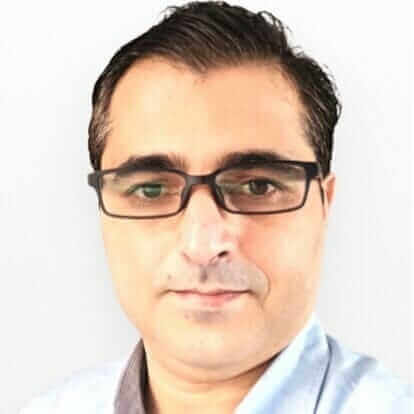
Dr. Mahdi Ikhlayel, PhD, Sustainability Science
Sustainability Director Sustainability Systems ArchitectDr. Mahdi Ikhlayel is DEISO’s Sustainability Director in Japan, and the lead expert consultant and trainer behind DEISO’s sustainability, GHG accounting and life cycle assessment training programmes.
He holds a PhD, Sustainability Science from the University of Tokyo and combines academic research with industry consulting experience in environmental sustainability, life cycle assessment, and environmental systems analysis.
With more than 13 years of professional experience, he has worked across academia and industry, including research roles at Tohoku University and Ritsumeikan University in Japan, and consulting roles in the United States.
His expertise covers greenhouse gas accounting across scopes 1–3, life cycle assessment, carbon footprint analysis, circular economy strategy, environmental impact assessment, and sustainability analytics.
He also contributes to the scientific community as a peer reviewer for international journals including Journal of Cleaner Production, Resources, Conservation & Recycling, and Waste Management.
- PhD, Sustainability Science — the University of Tokyo
- Sustainability Director and Sustainability Systems Architect — DEISO, Japan
- 13+ years in LCA and sustainability consulting
- Former researcher — Tohoku University and Ritsumeikan University
- International consulting — Japan and the United States
- Peer reviewer — leading environmental science journals
Frequently asked questions
What the training covers, who it suits, and which standards it follows.
What participants will be able to do
The programmes build practical capability to calculate a corporate GHG inventory in software rather than in spreadsheets. On completion, participants can:
- Explain Scope 1, 2 and 3, and assign a company’s emission sources to the correct scope and Scope 3 category
- Work with the GHG Protocol and the ISO standards used in corporate GHG accounting
- Separate foreground and background data, and pair activity data with suitable emission factors
- Build a GHG case study in openLCA with the DEISO LCA Database
- Calculate Scope 1 and 2 emissions in openLCA, and Scope 3 emissions across all 15 categories in the Expert+ plan
- Check and interpret scope results, and find the sources that drive them
Scope 3 calculation in openLCA is part of the Expert+ plan only. Manual calculation in Excel is part of the Expert and Expert+ plans. The Professional and Expert plans cover Scope 3 in theory.
Prerequisites for participation
No prior experience in GHG accounting or openLCA is required to join the Professional programme. Every plan starts with Scope 1, 2 and 3 theory, because the openLCA case study cannot be set up or checked without it.
The openLCA functions needed for GHG accounting are taught within the training. The programmes do not include the full LCA Professional training. The training suits professionals in sustainability, energy and environmental management, corporate reporting, and consulting.
What problems this training helps solve
Many companies still calculate Scope 1, 2 and 3 in Excel calculators or standalone applications, which become hard to check, extend and update as the inventory grows. The training addresses challenges such as:
- Spreadsheet inventories that are hard to trace and check
- Difficulty assigning emission sources to the correct scope and Scope 3 category
- Uncertainty in choosing emission factors and handling activity data
- Limited capability to calculate Scope 3 emissions across the value chain
- Rebuilding the whole calculation every reporting year
- Limited capability to explain GHG results to decision-makers
Building the inventory in openLCA gives a structured model that can be checked, updated and reused year after year.
What participants receive from the DEISO LCA Database
The training uses the DEISO LCA Database, a life cycle assessment database built by DEISO from openly licensed life cycle inventory data, in which every process carries its cradle-to-gate emission factors.
Trainees receive the training case study and the processes it uses, free of charge. The full database is not included.
Methodological standards covered
The training introduces the frameworks used in corporate GHG accounting, covering concepts and practice aligned with:
- GHG Protocol Corporate Standard — corporate GHG accounting and reporting
- GHG Protocol Corporate Value Chain (Scope 3) Standard — value chain emissions, Expert and Expert+
- GHG Protocol Scope 3 Calculation Guidance — calculation methods by category, Expert+
- ISO 14064, ISO 14067, ISO 14040/44 and ISO 14066 — introduced in all plans, with ISO 14064 Parts 1, 2 and 3 covered in Expert+
DEISO is not a certification or verification body. The training covers how these frameworks are applied and interpreted.
Explore training programmes
Browse DEISO’s full training portfolio and find the programme that matches your goals, experience level, and technical requirements.
Explore training programmes →Training case studies
Real training engagements run by DEISO, showing how professionals and organisations build practical, review-ready sustainability capability.
View case studies →Ask Mirai about a training programme
Get immediate answers and explore specific training programmes by asking DEISO’s AI assistant directly.
Ask Mirai →Why DEISO training
Why organisations choose DEISO for expert-led, practical training programmes run worldwide.
Read why DEISO training →What makes DEISO training premium?
DEISO’s premium execution model, advanced training methods, and internationally trusted expertise.
Discover premium training →Training FAQ
Key details on formats, scheduling, certification, and programme structure.
View the training FAQ →Request a training quotation
Ready to proceed? Request a quotation for your selected training programme and format.
Request a quotation →Need help choosing the right training?
Tell us your goals and experience level and DEISO will point you to the programme that fits.
Start at go.dei.so →