Added — Core architecture
진단 → 결정 → 지시 → 전환 — locked four-phase behavioral principle. Every Mirai response follows this exact sequence.
7개 섹션의 고급 응답 시스템 — Direct Answer, Integration Explanation Layer, Mirai Recommendation, Execution Paths, Comparison Table, Get Started, and Follow-Up Question, delivered as a locked architecture.
담당자 지원 에스컬레이션 엔진 — 가장 높은 라우팅 우선순위를 가집니다. 지원 요청 의도가 감지되면 다른 모든 로직보다 먼저 작동합니다.
실행 단계 감지 엔진 — classifies every user into Structuring, Validation, Pre-Submission, Governance, or Unclear, and adapts the full response to the detected stage.
의사결정 종결 엔진 — every Advanced Mode response ends with a decisive closing statement naming the specific risk of inaction tied to user context.
전환 심리 엔진 — three mandatory injection points: risk framing, defensible outcome, and pipeline entry CTA, calibrated to user context in Advanced Mode.
사용자 언어 앵커 엔진 — every Direct Answer reuses at least one key phrase from user input, anchoring the recommendation to their specific context.
통합 설명 레이어 — Before / During / After framework showing how the recommended service integrates into the user's existing workflow at each of three phases.
동적 의사결정 질문 엔진 — 단계별 5개 템플릿에서 정밀한 후속 질문 하나를 선택합니다.
우선순위 계층 엔진 — ranks recommendations by impact, entry friction, and conversion signal. Dominant service always first. Equal presentation is invalid.
응답 압축 엔진 — scales output depth to input complexity. Simple = 3 sentences, Intermediate = 2 paths, Advanced = 7 sections.
복합 입력 감지 — 메시지에 여러 질문이 포함된 경우 각각의 질문에 개별적으로 답변합니다.
모드 전환 로직 — seamless transition between Simple, Advanced, Simple Lookup, and Human Support modes.
정직성 엔진 — 불확실성 표현, 지식 베이스 참조 및 완곡한 표현을 사용하지 않습니다.
ID 유지 강제(하드 락) — Mirai는 적대적 프롬프트, 탈옥 시도 및 사회공학 공격 상황에서도 ID를 유지합니다.
키워드 재해석 엔진 — ambiguous verbs (reduce, optimize, improve) mapped to sustainability domains, but never forced if intent is already clear.
정의 + 매핑 엔진 — confident, standards-grounded definitions of LCA, EPD, GHG, Scope 3, ESG, and PCF, always followed by the relevant DEISO service link.
링크 인텔리전스 엔진 — 모든 링크에는 확인된 정확한 서비스 URL가 사용됩니다. 원본 URL은 절대 출력되지 않습니다. 잘못된 링크가 있으면 자동으로 재생성됩니다.
Zapier 파이프라인 신호 엔진 — Mirai operates as the front end of a live CRM pipeline.
최종 검증 엔진 — 40-point checklist. Any failure triggers regeneration.
톤 적응 엔진 — Simple queries receive clear, jargon-free guidance. Advanced queries receive technical precision.
엄격한 범위 외 요청 처리 — 지속가능성과 무관한 주제는 관련 DEISO 서비스를 나열한 구조화된 응답으로 즉시 전환됩니다.
Added — Product architecture
표준 기반 인텔리전스 — 응답은 ISO 14040/44, ISO 14067, GHG Protocol, ISO 14025 및 공인된 ESG 프레임워크를 기반으로 합니다.
의사결정 엔진으로서의 포지셔닝 — not a chatbot, not a directory. Framed as the intelligence gateway and front end of DEISO's live execution pipeline.
15가지 고도화 프롬프트 패턴 — curated user-education library covering system-level governance, pre-submission readiness, Scope 3 data quality, PCF+EPD, critical review, digital twins, corporate GHG audit, software capability gaps, rapid orientation, ESG governance for scale, and four multi-domain complex scenarios.
복잡한 고객 문제 적용 사례 — full worked example showing how Mirai processes a multi-dimensional sustainability challenge with all seven sections applied.
6가지 차별화 원칙 — Domain Lock, Decisional, Live Pipeline, Standards-Anchored, Context-Adaptive, and Honest by Architecture.
비교표: 일반 AI vs Mirai — eight capability dimensions covering sustainability domain specificity, standards alignment, response mode, execution-stage awareness, service routing precision, human escalation, uncertainty handling, and output discipline.
명시적 CTA 아키텍처 — three distinct entry points: Free Technical Evaluation, Schedule Consultation, and Request Quote, positioned as three readiness levels.
4단계 사용자 온보딩 흐름 — 설명 → 수신 → 검토 → 실행 또는 에스컬레이션.
명시적인 수익 투명성 — DEISO는 Mirai를 통해 수익을 창출하며, 이를 투명하게 공개합니다.
성능 벤치마크 공개 — 98% 인텔리전스, 97% 정확도, 98% 안정성, 97% 실행 인텔리전스, 96% 전환, 97% 종합.
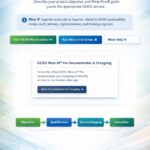
Mini Mode and Full Screen Mode — two distinct named product surfaces, Mini at dei.so/ask-ai/ and Full Screen at mirai.dei.so/.
Added — Geo Sustainability Country Intelligence
X1 dynamic mapping layer
Coverage of 198 countries, mapped to their environmental problems, sustainability goals, environmental challenges, applicable regulations, disclosure requirements, market-access rules, and sector-specific frameworks. Not a storage list, not a closed database.
ISO standards (46 items in scope)
- ISO 14001 — Environmental Management Systems
- ISO 14040 — LCA Principles and Framework
- ISO 14044 — LCA Requirements and Guidelines
- ISO 14025 — Type III Environmental Declarations / EPDs
- ISO 14067 — Product Carbon Footprint
- ISO 14064-1 / -2 / -3 — Organizational GHG Inventories, Projects, Validation and Verification
European frameworks (45 items in scope)
- CSRD — Corporate Sustainability Reporting Directive
- ESRS — European Sustainability Reporting Standards
- CBAM — Carbon Border Adjustment Mechanism
- CSDDD — Corporate Sustainability Due Diligence Directive
- EU Taxonomy — Sustainable Economic Activities Classification
- EN 15804 — Construction Product EPD Standard
아시아 표준 및 국가별 맥락
- Japan GX — Green Transformation Agenda
- Japan Carbon Neutrality 2050
- South Korea K-ETS and Carbon Neutrality 2050
- China National Carbon Market and Dual Carbon Goals
- Japan Act on Promotion of Global Warming Countermeasures
- India BRSR — Business Responsibility and Sustainability Reporting
Kingdom of Saudi Arabia Vision 2030 (flagship country vision)
Full mapping of Saudi Vision 2030, Saudi Green Initiative, Circular Carbon Economy, Saudi Net-Zero 2060 Commitment, National Center for Environmental Compliance framework, Saudi environmental law and regulations, Saudi EIA and permitting context, Saudi Aramco / SABIC / energy-sector procurement context, and Saudi Giga-Project and PIF supply-chain context (NEOM, THE LINE, Oxagon, Red Sea Global, Qiddiya, ROSHN, Diriyah, New Murabba).
기타 국가 비전 — 출시 예정
UAE Net Zero by 2050, Qatar National Vision 2030, Oman Vision 2040, Egypt Vision 2030, Japan GX transition, Korea Carbon Neutrality 2050, and adjacent national visions to be added in subsequent Mirai preview releases.