

ScopeSplit training: Scope 1, 2 and 3 from your openLCA model
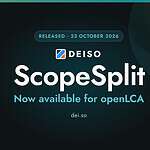
ScopeSplit training teaches your team to calculate, split and report Scope 1, 2 and 3 emissions with all 15 Scope 3 categories from your own openLCA model, in two hands-on sessions of 3 hours.
Each trainee runs a demo model, reads the checks, uncertainty and sensitivity, and produces a Scope report. Remote training is priced per trainee; on-site and off-site training is quoted for your team.
What the ScopeSplit training covers
Ten modules in two sessions of 3 hours, about a third of them hands-on. Every module teaches what the app does today, on a demo openLCA model that DEISO provides.
From your openLCA model to Scope 1, 2 and 3
3 hours- 1Scope 1, 2 and 3 for openLCA usersGHG Protocol structure, the 15 Scope 3 categories, location-based Scope 2, and what ScopeSplit calculates next to openLCA.30 min
- 2SetupInstall, activate the licence, settings, updates and Sync & Backup.20 min
- 3Ways into your modelAn openLCA export or snapshot, or a live openLCA connection. Choosing the GWP method; the process list and its source chips.40 min
- 4How inputs are placed in scopesThe placement order: tags in openLCA, scope codes, then automatic rules. Engine Tags.20 min
- 5Your first calculationCompany model mode, the uncertainty check and Run. Reading the total, Scope 1, 2 and 3, the 15 categories and closure.50 min
- •Hands-on and questionsEach trainee runs the demo model provided by DEISO.20 min
Checks, analysis and the Scope report
3 hours- 6Checks a reviewer expectsClosure, the six Double counting checks, the model check, uncertainty data and the source of every process.35 min
- 7Uncertainty and sensitivityMonte Carlo: the range, the 95% interval and where uncertainty comes from. Sensitivity analysis and the live what-if.40 min
- 8Sankey diagram and Chat with resultsReading and exporting the Sankey diagram; asking questions about results with your own key.25 min
- 9The Scope reportOrganisation and period, a market-based Scope 2 provided by the preparer, AI-supported drafting, the readiness score, PDF and Word. Excel and CSV exports.45 min
- 10Working at scaleHistory, whole-database mode, snapshots and keeping runs in sync.20 min
- •Wrap-upQuestions, and a briefing for the optional examination.15 min
ScopeSplit training, remote, on-site or off-site
The same ten modules in every format. Remote training is priced per trainee; on-site and off-site training cost more and are quoted for your team.
Live online sessions
USD 990per trainee- Two sessions of 3 hours, in a live virtual classroom
- Demo model and a training licence for the sessions
- Join from any location
At your location
Quotationfor your team- A DEISO trainer at your offices
- The ten modules, on your own computers
- Priced by location, team size and dates
At a venue arranged with DEISO
Quotationfor your team- Away from daily work, for focused sessions
- The ten modules, hands-on
- Priced by venue, team size and dates
Optional examination and certificate, per trainee, in every format, with two attempts included. Not included in the training price.
After the ScopeSplit training
- Calculate and split Scope 1, 2 and 3, with all 15 categories, from their own openLCA model
- Explain every number with closure, Double counting, the model check and uncertainty
- Find the inputs that drive the total, and test changes with the what-if
- Produce a Scope report in their company’s name, as PDF or editable Word
| Optional examination | Taken after the training, online, with an extra fee |
|---|---|
| Written part | 25 multiple-choice questions, 30 minutes |
| Practical part | Run the demo model and report the total, the Scope 3 share and the largest category, 20 minutes |
| Pass mark | 70% overall |
| Attempts | Two attempts are included in the examination fee, whether the first is passed or not |
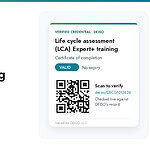
| Certificate | Issued in My DEISO and verifiable in Search certificates |
ScopeSplit training: your questions
Who is the ScopeSplit training for?
Do trainees need a ScopeSplit licence?
No. DEISO provides a training licence and a demo openLCA model for the sessions, so trainees can follow every module hands-on. A Pro, Team or Enterprise licence for your own work can be ordered at any time, before or after the training.
What is the difference between remote, on-site and off-site training?
The ten modules are the same. Remote training runs as live online sessions and is priced per trainee. On-site training takes place at your offices, and off-site training at a venue arranged with DEISO; both cost more than remote and are quoted for your team.
Is a certificate included?
The examination and certificate are optional and offered with an extra fee of USD 240 per trainee, which includes two attempts. The examination has a written and a practical part; on passing, the certificate is issued in My DEISO and can be verified in Search certificates.
Can the training use our own openLCA model?
The sessions use the demo model that DEISO provides, so every trainee follows the same steps at the same pace. Applying ScopeSplit to your own openLCA model is offered as a separate session, quoted on request, and is often the natural step after the training.
How do we book?
Use Book remote training for live online sessions, or Request a quotation for on-site and off-site training. DEISO replies with available dates, the session plan and, for on-site and off-site training, a quotation for your team and location. Training can start soon after booking.
Get started
Book your ScopeSplit training
Remote training at USD 990 per trainee, or on-site and off-site training quoted for your team. Try ScopeSplit for 14 days on your own openLCA model at any time.
Developed by DEISO
openLCA is open-source software developed by GreenDelta GmbH and licensed under the Mozilla Public License 2.0. DEISO ScopeSplit is an independent product of DEISO LLC; it is not affiliated with, sponsored by or endorsed by GreenDelta GmbH. Results are structured after the GHG Protocol Corporate Standard and the Corporate Value Chain (Scope 3) Standard; ScopeSplit is not reviewed or approved by the GHG Protocol.