

Get Started!

Life Cycle Costing Training | LCCA & TCO training Courses

Training programme

Life cycle costing analysis (LCCA) professional training

Advanced training programmes aligned with ISO 15686-5, IEC 60300-3-3 and ASTM E917, built for engineers, cost analysts, and procurement teams developing practical life cycle costing capability.

The programme is built on DEISO’s own life cycle costing curriculum — thirteen parts, seventy-four chapters, 194 equations and 101 exercises.

Progression path
Zero knowledge Professional Expert Expert+

Three plans, 18 to 27 hours, online and per trainee.

Overview

Three professional LCCA training programmes

DEISO runs three professional life cycle costing programmes for engineers, cost analysts, procurement teams, and asset owners building practical capability in LCC, TCO and LCCA. Each programme combines methodological foundations, worked calculation, and an applied case study from the trainee’s own industry.

A purchase price is one number observed once. A cost of ownership is a stream observed for as long as the asset runs, and across the asset classes covered here, acquisition typically accounts for a small share of it. The programmes teach you to build the second figure, evidence it, and defend it in front of a reviewer.

Flexible on-demand programmes run one-to-one or for small groups, with scheduling arranged around the trainee and the instructor.

Learning pathway

How the three programmes build on each other

The pathway develops the ability to scope, build, discount, test and defend a life cycle cost study step by step. Choose the tier that matches the depth of capability you need.

Professional

Introduces the core method and the practical workflow of a life cycle costing study: the four decisions that precede any figure, the cost breakdown structure, total cost of ownership, and where each figure actually comes from.

Expert

Expands that foundation with the analysis layer — discounting, net present value, equivalent annual cost, and the sensitivity work that shows which assumption actually decides the answer. Includes a DEISO LCC Pro demonstration.

Expert+

DEISO’s most complete LCCA programme. Extends the Expert curriculum with procurement and supplier evaluation, the decisions that are not a single comparison — repair, replace, defer, make or buy — and cost expressed as a distribution rather than a point estimate.

Pricing note Prices shown are for remote training only

All prices on this page apply to remote, online training. On-site training at your location and off-site training in Japan are priced higher and quoted on request.

Request a quotation
Training plans

Compare the three LCCA training plans

All three plans run remotely in English, one-to-one or one-to-group, and are scheduled around the availability of the trainee and the instructor. The tables below list every module in the curriculum and show which plan covers it.

LCCA Professional $2,450 18 hours of training Price is per trainee Recommended for engineers, estimators, and cost analysts building a structured foundation in life cycle costing and total cost of ownership. Request a quotation →
LCCA Expert $3,450 24 hours of training Price is per trainee Recommended for analysts, reliability engineers, and asset managers producing discounted life cycle cost studies that must survive technical review. Request a quotation →
LCCA Expert+ $4,650 30 hours of training Price is per trainee Recommended for procurement leads, technical decision makers, and consultants evaluating competing bids on whole-life cost and deciding under uncertainty. Request a quotation →
Curriculum LCCA Professional $2,450 18 hours of training Price is per trainee Recommended for engineers, estimators, and cost analysts building a structured foundation in life cycle costing and total cost of ownership. Request a quotation → LCCA Expert $3,450 24 hours of training Price is per trainee Recommended for analysts, reliability engineers, and asset managers producing discounted life cycle cost studies that must survive technical review. Request a quotation → LCCA Expert+ $4,650 30 hours of training Price is per trainee Recommended for procurement leads, technical decision makers, and consultants evaluating competing bids on whole-life cost and deciding under uncertainty. Request a quotation →
Format and access 5 of 5 5 of 5 5 of 5
The training is conducted in English so that international participants can follow it directly. Professional Expert Expert+
The programme runs remotely over Zoom, on demand, for an individual or a group. DEISO proposes a schedule based on the mutual availability of the trainee or trainees and the instructor, and the schedule can be revised until both sides agree. Training begins once payment is processed. Professional Expert Expert+
Each module is one live three-hour session with its own Excel practice workbook and PDF module pack. Professional covers 6 modules (18 hours), Expert covers 8 modules (24 hours), and Expert+ covers 10 modules (30 hours). Every plan ends with the customised case study from your industry. 6modules 8modules 10modules
Every module is a single three-hour session. The schedule is therefore predictable regardless of which plan is chosen, and modules can be spread across days or weeks to suit the trainee. Professional Expert Expert+
Access to DEISO Grid, the online training platform where module materials, templates and session records are held for the duration of the programme. Professional Expert Expert+
LCC (life cycle costing) foundations 3 of 3 3 of 3 3 of 3
What life cycle costing is, and the four decisions that precede any figure: whose costs count, where the boundary sits, what the functional unit is, and over what period. Also covers how LCC differs from budgeting, depreciation and project cost control. Professional Expert Expert+
Enumerating costs from a structure agreed in advance rather than recalled at the deadline. Covers the lifecycle stages, how a cost breakdown structure is built and levelled, and the common omissions that quietly change a result. Professional Expert Expert+
Planning data collection, grading evidence, and keeping a source register so every figure traces back to its origin, owner and date. Also covers what to do when the number simply does not exist. Professional Expert Expert+
TCO (total cost of ownership) 2 of 2 2 of 2 2 of 2
What total cost of ownership means, how it relates to life cycle costing, and the full set of ownership cost elements: acquisition, installation and commissioning, energy, consumables, maintenance, spares, downtime, training, compliance, disposal and residual value. Professional Expert Expert+
Holding the functional unit constant so two options are genuinely comparable, adjusting for differences in capacity, availability and service life, and applying the decision rules that follow from a completed TCO comparison. Professional Expert Expert+
LCCA (life cycle cost analysis) 0 of 2 2 of 2 2 of 2
Time value of money, present value of a cost stream, annuities and gradients, selecting and defending a discount rate, real against nominal analysis, and the decision measures compared — net present cost, equivalent annual cost and payback. Professional Expert Expert+
One-way and two-way sensitivity analysis, tornado presentation, and switching values — the point at which an assumption flips the ranking. Answers the question a reviewer always asks: which assumption is actually deciding this? Professional Expert Expert+
Procurement and decision analysis 0 of 2 0 of 2 2 of 2
Publishing the evaluation method before bids open, normalising bids so they compare like for like, pricing warranty and service differences, understanding where cost really sits in a contract structure, and writing a recommendation that survives challenge. Professional Expert Expert+
The decisions that are not a single comparison: repair, overhaul or replace; act now, defer or stage; make or buy. Plus scenario analysis, probability-weighted cost, and expressing a result as a distribution rather than a point estimate. Professional Expert Expert+
Practice and materials 3 of 4 4 of 4 4 of 4
The final module builds one complete study end to end in your own sector, chosen at booking. Profiles include oil and gas, chemical and petrochemical, manufacturing, buildings and facilities, infrastructure and water, energy and power, transport and fleet, mining, enterprise, software and cloud, and professional services. Professional Expert Expert+
A guided demonstration of DEISO LCC Pro, showing how LCC, TCO, discounting, evidence grading and supplier comparison are implemented in a structured platform rather than a spreadsheet, and how a study is carried forward from one cycle to the next. Professional Expert Expert+
Each module comes with its own Excel practice template, used live during the session and yours to keep. Six templates on Professional, eight on Expert, ten on Expert+. Professional Expert Expert+
Each module comes with a PDF pack carrying the written material, worked examples, equations and diagrams behind that session, drawn from DEISO’s life cycle costing curriculum. Professional Expert Expert+
Included in the plan Not included Select a module name to read what it covers.
Lead instructor

Dr. Mahdi Ikhlayel, PhD, Sustainability Science

Sustainability Director Sustainability Systems Architect

Dr. Mahdi Ikhlayel is DEISO’s Sustainability Director in Japan, and the lead expert consultant and trainer behind DEISO’s life cycle costing and sustainability training programmes.

He holds a PhD, Sustainability Science from the University of Tokyo and combines academic research with industry consulting experience in environmental sustainability, life cycle assessment, and environmental systems analysis.

With more than 13 years of professional experience, he has worked across academia and industry, including research roles at Tohoku University and Ritsumeikan University in Japan, and consulting roles in the United States.

He is the product architect behind DEISO LCC Pro, a professional desktop platform for life cycle costing, life cycle cost analysis and total cost of ownership. It is built on IEC 60300-3-3:2017 as the cross-industry life cycle costing backbone, ISO 15686-5:2017 for buildings and constructed assets, and ISO 15663:2021 for the petroleum, petrochemical and natural gas industries. The platform carries thirteen configurable industry profiles including oil and gas and petrochemical, structured cost modelling across lifecycle stages with phase and category breakdown, evidence traceability from every figure to its source, responsible party, date and confidence grade, and a built-in Learning Centre holding the full methodology with its equations and derivations.

He also authored the life cycle costing and total cost of ownership body of knowledge that sits behind both the software and this training programme: 609 pages across 13 parts and 128 chapters, with 194 numbered equations and full variable definitions, 91 technical diagrams, 24 step-by-step derivations, 101 exercises with worked answers, and a 75-question assessment bank. The coverage runs from engineering economics and financial mathematics through evidence grading, procurement and bid normalisation, asset management and reliability economics, risk and sensitivity analysis, decision analysis, sustainability and circular economics, and sector applications. The same methodology is implemented in the software and taught in the programme.

He also contributes to the scientific community as a peer reviewer for international journals including Journal of Cleaner Production, Resources, Conservation & Recycling, and Waste Management.

Authority highlights
  • PhD, Sustainability Science — the University of Tokyo
  • Sustainability Director and Sustainability Systems Architect — DEISO, Japan
  • Product architect — DEISO LCC Pro, built on IEC 60300-3-3, ISO 15686-5 and ISO 15663
  • Author — 609-page LCC and TCO body of knowledge, 128 chapters and 194 equations
  • 13+ years in sustainability and life cycle consulting
  • Former researcher — Tohoku University and Ritsumeikan University
  • International consulting — Japan and the United States
  • Peer reviewer — leading environmental science journals
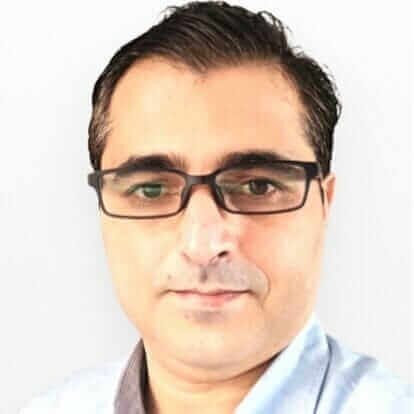
Dr. Mahdi Ikhlayel
Questions

Frequently asked questions

What the training covers, who it suits, which standards it follows, and how the three plans differ.

What is life cycle costing, and how is it different from LCA?

Life cycle costing is the systematic estimation and comparison of all costs attributable to an asset, system or service over a defined period of responsibility, on a common time basis, to make a decision between alternatives. A purchase price is one number observed once. A cost of ownership is a stream observed for as long as the asset runs.

LCCA quantifies money. LCA quantifies environmental burdens in physical units under ISO 14040 and ISO 14044. They share a structure and answer different questions.

DEISO teaches both, as separate programmes. This page covers the cost side.

Do I need prior knowledge to start?

No. The Professional plan starts from zero knowledge of life cycle costing and assumes no prior costing background. What helps is familiarity with your own assets and how your organisation records spend.

Expert and Expert+ assume the Professional content. If you already build cost models and want the analysis layer, you can start at Expert.

How do the three plans differ?
Professional — 18 hours, six modules

Life cycle costing and total cost of ownership. Scope a study, build the cost model, and evidence every figure.

Expert — 21 hours, seven modules

Adds the analysis layer: discounting, net present value, equivalent annual cost, sensitivity and switching values, plus a DEISO LCC Pro demonstration.

Expert+ — 27 hours, nine modules

Adds procurement and supplier evaluation, and the decisions that are not a single comparison — repair, replace, defer, make or buy, scenarios and probabilistic cost.

Which standards does the training follow?

The methodology is grounded in the principal life cycle costing standards and method documents, and the training explains where they agree and where they diverge.

  • IEC 60300-3-3 — dependability management, application guide for life cycle costing
  • ISO 15686-5 — buildings and constructed assets, service life planning, life cycle costing
  • ISO 15663 — petroleum, petrochemical and natural gas industries, life cycle costing
  • ASTM E917 — measuring life cycle costs of buildings and building systems
  • NIST Handbook 135 — life cycle costing manual, real against nominal analysis

DEISO is not a certification or verification body. The training teaches methodological alignment with these standards; it does not certify compliance with them.

What materials do I receive?

Every plan includes, for each module:

  • An Excel practice template — used live during the session and yours to keep
  • A PDF module pack — the written material, worked examples, equations and diagrams behind that session
  • DEISO Grid access — the online training platform where materials are held

That means six templates and six packs on Professional, seven on Expert, and nine on Expert+.

What is the customised case study?

The final module builds one complete study end to end in your own sector, chosen at booking. Rather than a generic worked example, the case reflects the assets, cost categories and terminology you actually work with.

Sector profiles available include oil and gas, chemical and petrochemical, manufacturing, buildings and facilities, infrastructure and water, energy and power generation, transport and fleet, mining and minerals, enterprise, software and cloud, and professional services.

On Expert and Expert+, the case study is accompanied by a DEISO LCC Pro demonstration showing how LCC, TCO, discounting, evidence grading and supplier comparison are implemented in software rather than spreadsheets.

How is the training scheduled?

All three plans run remotely in English, one-to-one or one-to-group, with sessions arranged around the availability of the trainee and the instructor. Every module is a three-hour session, so the schedule is predictable regardless of plan.

Prices are per trainee. For team enrolments, tell us the group size in your enquiry and we will scope it directly.

Who should take which plan?
  • Professional — engineers, estimators and cost analysts who need to build and evidence a cost model
  • Expert — analysts, reliability engineers and asset managers producing discounted studies that must survive review
  • Expert+ — procurement leads, technical decision makers and consultants evaluating bids and deciding under uncertainty

If you are unsure, describe the decision you need to make in your enquiry and we will point you to the right plan.

Contact Info.

English Address:
Level 21 Shiodome Shibarikyu Building
1-2-3 Kaigan, Minato-ku
105-0022 Tokyo, Japan.

Japanese Address:
〒105-0022 東京都港区海岸1-2-3
汐留芝離宮ビルディング21階, 合同会社DEISO.

Phone (JP): /
Phone (EN):
Fax: /
Email:

Latest News

Get Started with DEISO the Easy Way!

Seven ways to start

Choose the entry point that fits where you are

Not every visitor knows what they need on day one. These seven onboarding paths cover the full range — from knowing exactly which service you want to starting from a question and letting AI guide you. Pick whichever fits.

1If you know what you needRecommended Find the right DEISO service Match your requirement to the right DEISO service in a few clicks. Filter by LCA, GHG, PCF, EPD, ESG, critical review, S-LCA, waste, circular economy, EIA, and more. Fastest path if you already know the scope. Good for “We need Scope 3 review and pre-submission checks before verification” or “We need an EPD prepared for EN 15804.” Open service finder → 2If you’re building internal capabilityRecommended Explore capacity building programs Match your team to the right DEISO training program — LCA, GHG accounting, PCF, EPD development, ESG reporting, environmental review, ISO 14001, and sector programs. Filter by role, level and format. Good for Teams building in-house LCA, GHG or EPD capability, and organisations aligned with workforce development priorities such as Saudi Arabia Vision 2030. Open training finder → 3If you need technical direction before engagementRecommended Free Technical Evaluation Request an initial technical evaluation for your sustainability requirement before committing to a full engagement. DEISO reviews your project need, technical context, enterprise requirement, reporting objective, and service direction to help identify the right path. Good for Enterprises, suppliers, and public sustainability teams that need technical direction before starting LCA, GHG, PCF, EPD, ESG, or sustainability operating system work. Start free evaluation → 4If you want an answer fast Use quick search Click the search icon in the page sidebar, or press Ctrl Shift Del to open the finder from anywhere on the site. Built for quick keyword lookups when you want results in seconds. Good for Anyone who already knows the term they are looking for — a standard, a service name, a training program — and wants to land on it without navigating. Open quick search → 5If you want to explore in depth Use advanced search Search across the full DEISO knowledge base — services, solutions, methodology, case studies, articles and technical resources. Best for when you want to research first, decide later. Good for Researchers, procurement teams and technical leads comparing methodology depth before opening a conversation. Open advanced search → 6If you’d rather see everything at once Browse the full site map A single index of every page and every article on the site — services, training programs, solutions, methodology, case studies and news. Filter it as you type, or read the structure top to bottom. Good for Returning visitors looking for a page they have seen before, and anyone who would rather scan the whole structure than answer filter questions. Open the site map → 7If you’d rather ask a questionAdvanced Ask Mirai AI DEISO Mirai™ AI Pro is DEISO’s AI guidance assistant. Ask a question about your sustainability need — it maps you to the right service, explains the approach, and hands off to the DEISO team when you’re ready. Try asking “What do we need to prepare for CSRD Scope 3 disclosure?” · “How do we start a product carbon footprint?” · “Which DEISO service fits an EPD project?” Ask Mirai →