

Professional training program
Circular economy professional training program
Circular economy principles and technologies in depth — with industry-specific applications for the oil, gas, chemical, and manufacturing sectors.
Introduction
Why the circular economy matters now
The program opens on the case for moving to a circular economy: resource depletion, environmental pollution, and climate change. It sets out the part the oil, gas, chemical, and manufacturing industries play in driving that transition.
Overview
What the program covers
Fundamental topics
-
Circular economy concepts
- Definition and principles of a circular economy
- Key characteristics and benefits
- Comparison to a linear economy
-
Waste management
- Types of waste and their environmental impact
- Waste reduction, reuse, and recycling strategies
- Waste-to-energy technologies and their applications
-
Resource efficiency
- Principles of resource efficiency
- Strategies for reducing resource consumption
- Life cycle assessment and its role in resource efficiency
-
Product design for circularity
- Design principles for circular products
- Cradle-to-cradle design and its implications
- Modular design and product longevity
-
Supply chain management
- Circular supply chain concepts
- Collaborative partnerships and reverse logistics
- Sustainable sourcing and procurement practices
Advanced topics
- Circular economy design principles — the fundamental principles of circular design, including material selection, product design, and manufacturing processes
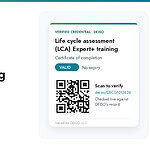
- Life cycle assessment (LCA) — advanced LCA methodologies for assessing the environmental impact of products and processes across their full life cycle
- Circular economy business models — business models that let organisations create value and optimise resources within a circular economy context
- Circular economy policy and regulation — the evolving regulatory landscape and the policy frameworks supporting the transition
- Digitalisation and circular economy — the role of digital technologies in circular economy practice, including IoT, data analytics, and blockchain
- Industry-specific case studies — real-world examples from the oil, gas, chemical, and manufacturing industries showing circular economy principles and technologies in use
Who it is for
Audience
- Professionals working in the oil, gas, chemical, and manufacturing industries
- Target companies include Saudi Aramco, PETRONAS, and other leading industrial companies in the region
Outcomes
What participants take away
- A working understanding of the principles, methodologies, and practical applications of the circular economy
- The capability to identify and implement circular economy strategies within their organisations
- The skills to assess the environmental and economic benefits of circular economy initiatives
How it runs
Training delivery
Offsite and onsite training are both available, shaped around your organisation’s needs. Sessions can run at your premises or at a designated offsite location.
Next step
Not sure which service fits your project?
Tell us your scope, timeline, and target outcome — DEISO will point you to the right service or scope the work directly.