

Why Life Cycle Cost Analysis Matters in Real Business Decisions
Life Cycle Cost Analysis (LCCA) is not only a financial exercise. It is a strategic decision framework that helps organizations understand the full cost of owning, operating, maintaining, upgrading, and retiring a system, product, asset, or infrastructure investment.
In practice, many organizations still make procurement and investment decisions based mainly on initial purchase price. That approach can hide long-term cost exposure, inflate operating risk, and lead to choices that appear economical at the beginning but become inefficient across the full lifecycle.
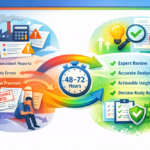
Where Organizations Commonly Make Errors
Focusing Only on Upfront Cost
Capital cost is often treated as the main decision criterion, while energy use, maintenance burden, replacement frequency, downtime, and disposal costs are not modeled with sufficient rigor.
Weak Assumptions About Operational Life
Many LCCA models depend on assumptions about service life, performance decline, usage intensity, and maintenance intervals. When those assumptions are unrealistic, the total cost profile becomes misleading.
Ignoring Uncertainty in Cost Drivers
Inflation, energy prices, replacement cycles, and labor costs can materially change long-term economics. Static cost assumptions often produce false confidence in the final result.
Separating Cost Analysis from Sustainability Strategy
Organizations frequently assess financial cost and environmental performance independently, missing the opportunity to evaluate where lower lifecycle cost and better sustainability outcomes can reinforce each other.
What This Can Cause in Practice
Poor Procurement Decisions
A lower purchase price can lead to higher lifecycle cost if the selected option creates larger maintenance demand, shorter service life, or higher operating expenses over time.
Higher Long-Term Financial Exposure
When lifecycle cost is not structured correctly, organizations may underestimate future cost commitments and expose themselves to avoidable budget pressure later.
Weak Strategic Alignment
Decisions made without full lifecycle financial insight can undermine resilience, ESG direction, asset planning, and internal business-case justification for better-performing alternatives.
Rework in Investment and Project Planning
Once procurement, engineering, or project planning moves forward on weak assumptions, correcting course can become expensive and time-consuming.
How DEISO Supports LCCA and Cost-Based Sustainability Decisions
LCCA Framework Development
DEISO helps organizations structure lifecycle cost models for products, systems, and projects so cost components are defined clearly and aligned with the real decision context.
Assumption and Cost Driver Review
We assess the logic behind service life, maintenance, replacement timing, operating cost, and other core variables to strengthen the technical defensibility of the analysis.
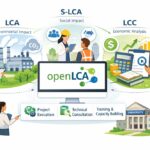
Integration with Sustainability and ESG Thinking
DEISO supports organizations that want to connect cost analysis with environmental strategy so long-term financial decisions can be evaluated alongside sustainability priorities.
Technical Advisory for Smarter Decision-Making
For organizations making procurement, design, infrastructure, or transition decisions, DEISO provides strategic advisory support to improve clarity, reduce risk, and strengthen confidence in the selected option.
Make Better Decisions Based on Full Lifecycle Cost, Not Just Purchase Price
If your organization is comparing alternatives, planning capital investment, assessing long-term value, or linking financial planning with sustainability strategy, Life Cycle Cost Analysis should be built on a structured and defensible foundation.
DEISO provides lifecycle cost analysis support, strategic advisory, and technical review to help organizations improve decision quality and reduce downstream financial risk.
From Cost Awareness to Decision Confidence
Understanding the concept of LCCA is useful. Applying it correctly in procurement, design, and strategic planning is what creates long-term financial intelligence and more resilient decisions.
Share this:
- Email a link to a friend (Opens in new window) Email
- Share on LinkedIn (Opens in new window) LinkedIn
- Share on X (Opens in new window) X
- Share on Facebook (Opens in new window) Facebook
- Share on WhatsApp (Opens in new window) WhatsApp
- Share on Reddit (Opens in new window) Reddit
- Print (Opens in new window) Print
- More