Introduction
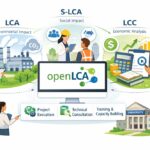
A relatively recent life cycle analysis method, known as Social Life Cycle Assessment (S-LCA), assesses the social impacts of products and services from conception through disposal. It is a thorough and methodical approach to assessing the social and environmental effects of goods, services, and systems from the extraction of raw materials through manufacturing, use, and disposal. Throughout a product’s life cycle, S-LCA seeks to discover, evaluate, and reduce negative social repercussions.
Traditional methods for assessing how goods and services may affect the environment include life cycle assessments (LCA). However, a product or service’s influence on society includes more factors than how it affects the environment. When evaluating a product’s or service’s impacts, S-LCA adopts a more comprehensive approach by considering social factors, such as the impact on the economy, health, and social fairness.
The S-LCA method entails determining a product or service’s social implications at every stage of its life cycle, from the extraction of raw materials through manufacture, usage, and disposal. This involves evaluating the product or service’s economic and socioeconomic effects on working conditions, pay, job generation, and regional economic growth. It also entails examining the social impacts, such as the influence on regional cultures, communities, and societies, as well as the effects on health and safety, such as the effects of air and water pollution.
The foundation of S-LCA is the knowledge that people use and cyclically engage with social systems. The social life cycle consists of four stages of analysis and evaluation. The phases in the S-LCA are derived from the ISO14044 framework as
- Goal and scope definition,
- Life cycle inventory analysis,
- Life cycle impact assessment, and
- Interpretation (UNEP, 2009).
People discover their social environment throughout initiation. They develop as they discover how to utilize and engage with the social system. They are using the system as they mature to accomplish their objectives. The system is in decay and no longer serves their needs.
Decisions regarding how to manage and advance social systems may be supported by S-LCA. Understanding how individuals utilize and interact with social systems and how those systems change over time may assist planners and managers.
After identifying an item’s or service’s impacts, S-LCA evaluates their severity and pinpoints viable countermeasures. This includes identifying possible responses and tactics to lessen the effects, such as changing to cleaner industrial procedures, improving working conditions, and enhancing regional infrastructure.
S-LCA has been applied in various sectors, from consumer electronics, agriculture, and automobiles to textiles and construction. It is an effective technique for identifying and reducing the social consequences of goods and services. Companies may benefit from identifying possible social repercussions in advance and implementing policies to lessen them. Thus, the effects on regional communities and cultures are minimal. At the same time, goods and services are produced and used socially responsibly.
S-LCA is a crucial step in the life cycle assessment process. Its significance is growing as businesses become more conscious of their social obligations. Companies are becoming more aware of the need to consider social implications in addition to environmental impacts when developing new goods and services. S-LCA is a valuable tool for businesses to ensure their goods and services are produced and used socially responsibly since it offers a thorough and systematic method of examining social consequences.
Although S-LCA adheres to the ISO 14040 framework, certain features change, are more prevalent, or are enhanced at each research stage. The United Nations Environment Programme Guidelines for Social Life Cycle Assessment of Products suggest a framework for creating life cycle inventories. A life cycle inventory is generated for indicators (e.g., number of jobs created) that are connected to effect categories (e.g., local employment) that are tied to five major stakeholder groups (e.g., worker, consumer, local community, society, and value chain actors).
How to get started with Social Life Cycle Assessment?
Of the theory of Social Life Cycle Assessment, you can get started by reading the Guidelines for social life cycle assessment of products at https://www.unep.org/resources/report/guidelines-social-life-cycle-assessment-products. You can also refer to DEISO’s Social Life Cycle Assessment services here: https://dei.so/topic/social-life-cycle-assessment-slca.
Once you understand the theory, you can employ software for using S-LCA. One of the best options is the openLCA software. It is open-source software and is available for free. At DEISO, we provide various training programs for openLCA, which you can reach at https://dei.so/openlca-training-programs.
Feel free to contact us for your Social Life Cycle Assessment(S-LCA) needs by submitting this form here: https://dei.so/contact
Share this:
- Email a link to a friend (Opens in new window) Email
- Share on LinkedIn (Opens in new window) LinkedIn
- Share on X (Opens in new window) X
- Share on Facebook (Opens in new window) Facebook
- Share on WhatsApp (Opens in new window) WhatsApp
- Share on Reddit (Opens in new window) Reddit
- Print (Opens in new window) Print
- More