

https://dei.so/wp-content/uploads/2026/04/EPD_Mistakes_DEISO.jpg
665
998
DEISO
DEISO
https://secure.gravatar.com/avatar/a48756c197f855de12d24753eac53a0c3836cb048a1965b0c9ca1660461e7ddb?s=96&d=mm&r=g
DEISO Agri & Industrial LCI Database | Literature-Based Emission Factors for LCA, PCF & Scope 3
Product Coverage, Data Philosophy, and Practical UseA literature-based database designed to capture all available emission factors and inventory datapoints across agriculture and industrial systemsThe DEISO Agri & Industrial LCI Database™ provides structured coverage across a defined set of products derived from scientific literature, including emission factors and full inventory datapoints. The database currently includes:Agriculture & CropsRice, Corn, Sugarcane, Sugar beetTomato, CucumberCacao, Coffee, TeaPalm oilLivestock & Animal ProductsBeef, Pork, Chicken, LambMilk, Cheese, Meat productsFood & Beverage ProcessingBeer productionChocolateProcessed and canned food…
Read more
Why AI Cannot Replace Training Programs | Expert Insight by DEISO
training programs.For organizations operating in sustainability, engineering, EPD) may use AI to understand EN 15804 requirements. However, without expert training, they may:Misinterpret system boundaries (A1–A3 vs A1–A5)Apply incorrect allocation rulesFail pre-verification checksA trained professional avoids these costly errors through guided interpretation and applied learning.3. Skill Building Requires Practice and Feedback — AI Cannot Evaluate CompetenceWhat Happens in Real TrainingTraining programs involve:Hands-on exercisesLive correctionsExpert feedback loopsPerformance validationWhy AI Fails HereAI cannot reliably assess whether a learner’s work is:Technically correctCompliant with standardsProfessionally…
Read more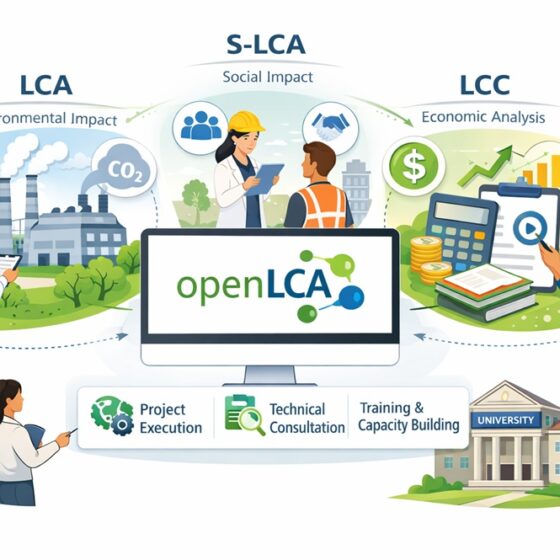
Life Cycle Sustainability Assessment (LCSA) for Funded Academic Projects
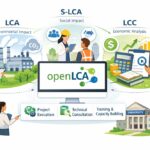
Introducing Life Cycle Sustainability Assessment (LCSA) — Integrated Environmental, Social, and Economic Analysis for Funded Academic ProjectsMost sustainability studies still operate in silos.Environmental impact is assessed separately.Social risks are treated independently.Economic analysis is often disconnected from both.This fragmentation limits the value of research outcomes.Life Cycle Sustainability Assessment (LCSA) solves this.DEISO now supports LCSA for funded academic and research-driven projects through an integrated, openLCA-based framework that combines:Social Life Cycle Assessment (S-LCA) — stakeholder risk, social hotspots, and supply chain exposureLife Cycle…
Read more
DEISO Announces 13 Pre-Submission Audit & Advisory Services for ESG, GHG, LCA & PCF
DEISO Announces 13 Pre-Submission Audit & Advisory Services to Strengthen Sustainability Governance and Verification Readiness In today’s regulatory, procurement, and investor-driven environment, sustainability reporting alone is no longer enough. Organizations are increasingly expected to demonstrate methodological integrity, data traceability, internal control, and audit-ready documentation across ESG disclosures, GHG inventories, Life Cycle Assessment (LCA), Product Carbon Footprint (PCF) studies, and Environmental Product Declarations (EPDs). To respond to this growing market need, DEISO announces its structured portfolio of 13 Pre-Submission Audit &…
Read more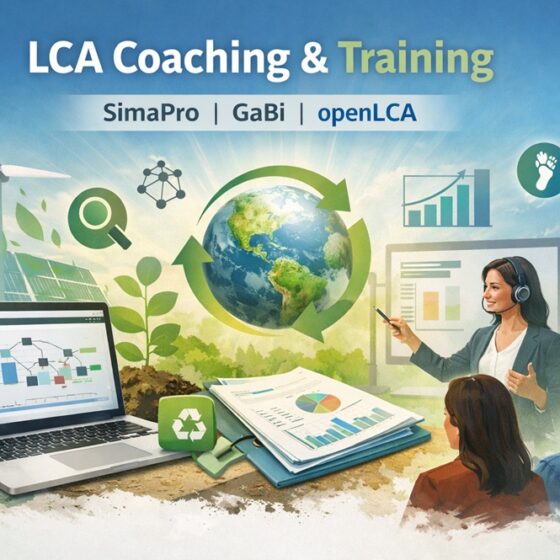
Introducing LCA Software Coaching (1:1) for openLCA, SimaPro, GaBi
openLCA, ESG and carbon professionalsengineers working with LCA toolsIf you already use openLCA, SimaPro, or GaBi —this service is designed for you.Purpose of the serviceTo help experienced users:learn new topics in openLCA, SimaPro, or GaBiimprove knowledge in selected areasdevelop advanced modeling capabilitiesstrengthen practical LCA software skillsExplore the Coaching ProgramsopenLCA Coaching />SimaPro Coaching /> .deiso-lca-cta-wrap{ background: linear-gradient(135deg, #f6fbf7 0%, #ffffff 100%); border: 1px solid #d4e9da; border-radius: 22px; padding: 34px; box-shadow: 0 12px 34px rgba(0,0,0,0.06); box-sizing: border-box; overflow: hidden; position: relative; }…
Read more
How to Calculate Scope 3 Emissions (GHG Protocol Guide)
How to Calculate Scope 3 Emissions: A Practical Guide Based on the GHG Protocol Organizations worldwide are increasingly required to measure and report greenhouse gas emissions across their value chains. While Scope 1 and Scope 2 emissions are often relatively straightforward to quantify, Scope 3 emissions typically represent the largest and most complex portion of a company’s carbon footprint. In many industries, Scope 3 emissions account for 70–95% of total corporate greenhouse gas emissions. As a result, companies are under…
Read more
Carbon Disclosure Risk in Saudi Supply Chains | Vision 2030 Procurement Threat
ESG disclosure norms Global buyers increasingly demand: ISO-aligned Life Cycle Assessments Verified carbon data Disclosure readiness before contract award Supplier sustainability transparency This shifts carbon from “reporting issue” to “commercial eligibility criterion.” 3. Where Saudi Suppliers Are Most Exposed High-Risk Sectors Steel & fabricated metals Cement & construction materials Cables & electrical components Polymers & petrochemical derivatives Modular & prefab construction Industrial equipment manufacturing Supplier Exposure Trigger vs Procurement Risk Impact .deiso-table-wrap{ width:100%; overflow-x:auto; /* scroll only appears if needed…
Read more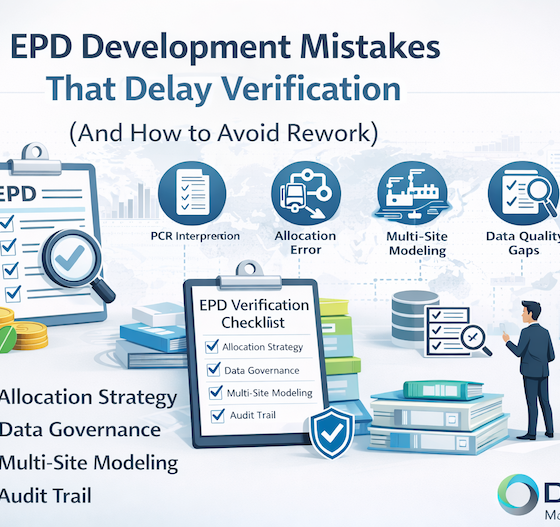
EPD Development Mistakes That Delay Verification (And How to Avoid Rework)
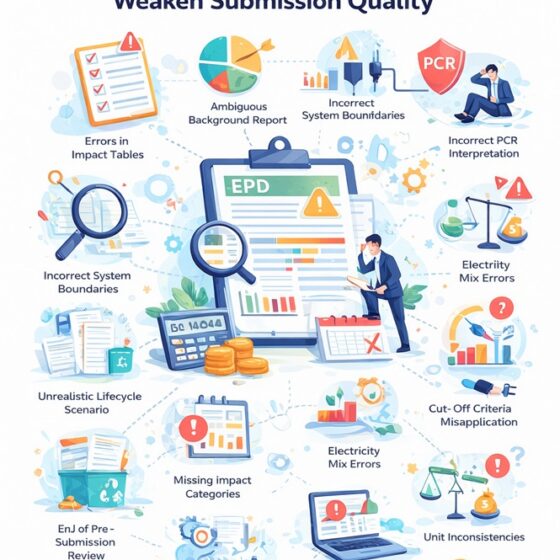
Environmental Product Declaration errorsPCR interpretation riskmulti-site advisory if:Your product system has multiple co-productsYou operate across multiple production sitesYou are preparing for EU construction marketsYou lack internal LCA governance expertiseYou have experienced verification delays previouslyEPD execution without a governance structure increases exposure to:Tender disqualificationPublication delaysCredibility erosionInternal resource wasteRequest an EPD Scoping ReviewBefore investing in full modeling, many organizations benefit from a structured EPD scoping review.This includes:PCR interpretation validationAllocation risk assessmentMulti-site modeling strategyData quality gap evaluationVerification readiness reviewEPD Verification Readiness FrameworkThis infographic…
Read more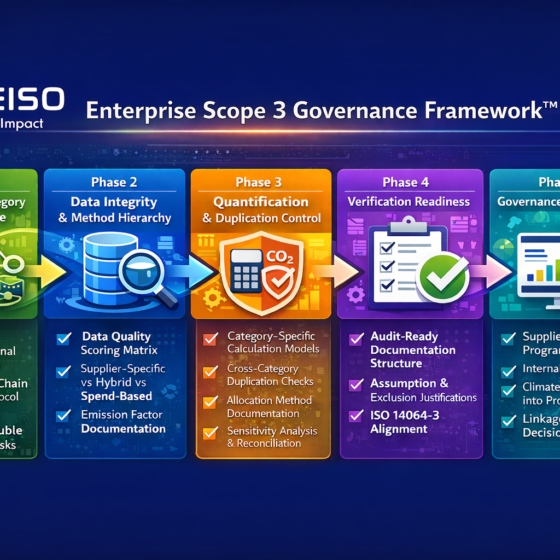
Why 70% of Scope 3 Carbon Inventories Fail — And the Governance Framework That Fixes It
ESG reporting frameworks Board-level risk management Output: Executive carbon governance roadmap. Carbon accounting must influence enterprise direction — not sit in a report. How This Framework Differentiates DEISO Most providers offer: Carbon calculations Template-based reporting Generic spend-based estimations DEISO delivers: Structural boundary architecture Methodological defensibility ISO-aligned documentation governance Scope 3 duplication control modeling Supplier data engagement frameworks Integration into ESG and transition strategy We operate at the intersection of: LCA methodology GHG Protocol standards ESG governance Climate risk management Verification…
Read more