
Comparing Life Cycle Assessment (LCA) and Environmental Impact Assessment (EIA)
Introduction
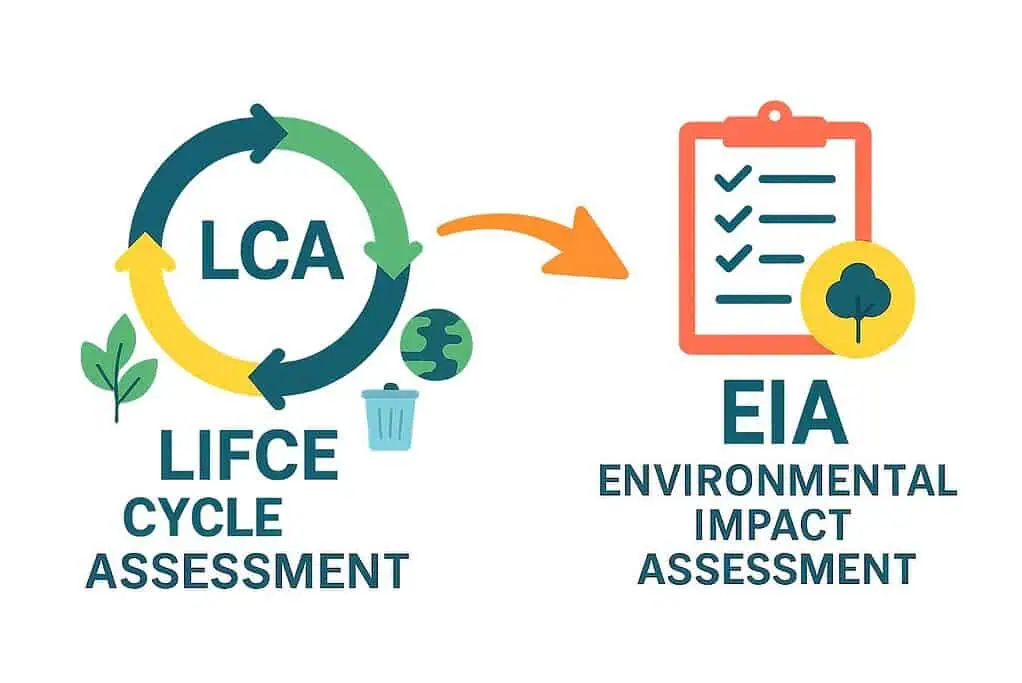
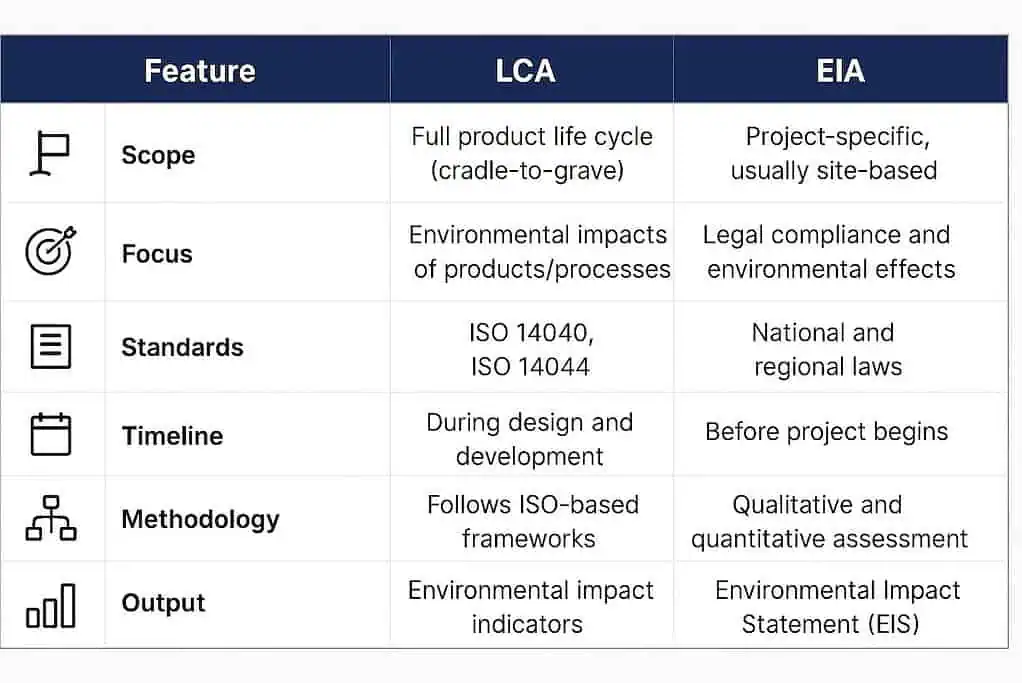
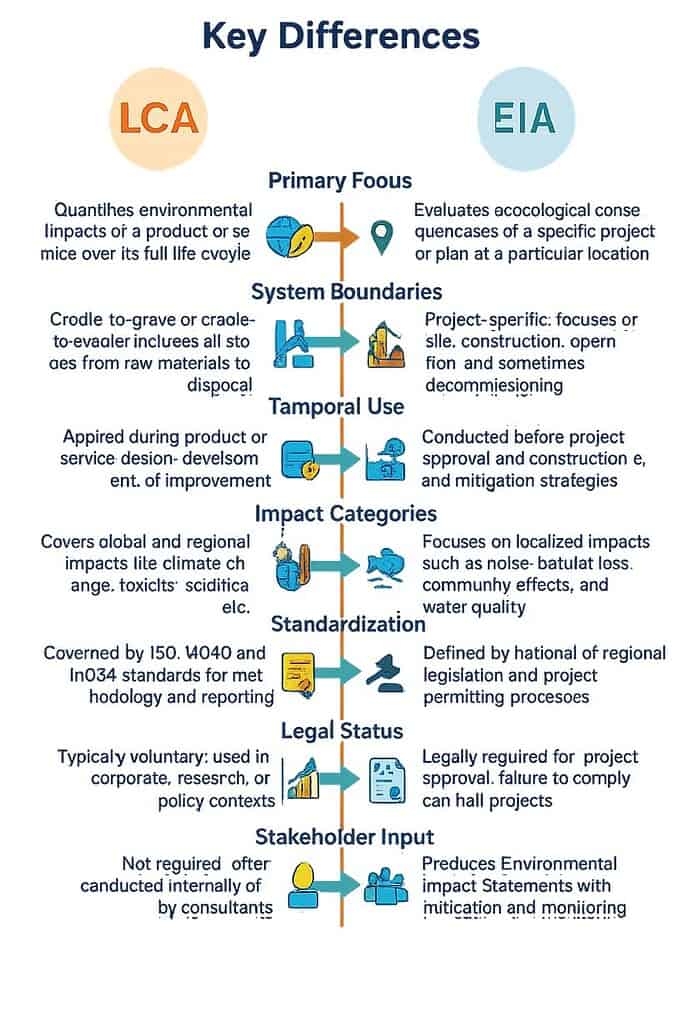
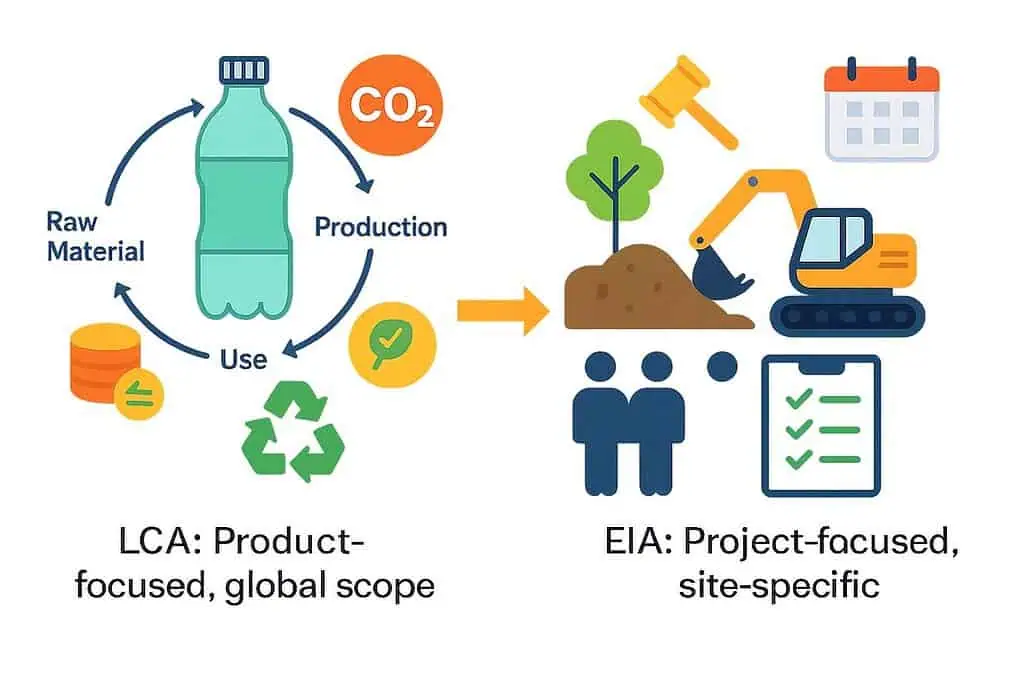
Life Cycle Assessment (LCA) and Environmental Impact Assessment (EIA) are two essential tools used by environmental engineers and sustainability professionals to evaluate ecological effects. LCA is a standardized methodology that quantifies the impacts of a product or service over its entire life cycle—from raw material extraction through manufacturing, use, and disposal. In contrast, EIA is a procedural framework embedded in environmental law that evaluates the potential environmental consequences of a specific project or plan within its local context before approval. Both approaches aim to inform decision-makers and protect the environment but differ fundamentally in scope, timing, and application.
Historical Background
Origins of EIA
The formal practice of EIA began with environmental protection legislation in the 1970s. Initially developed as a regulatory requirement for evaluating large infrastructure and industrial projects, the practice spread worldwide. Countries and regions introduced laws mandating that any major project must undergo an environmental assessment before approval. EIA became a cornerstone for integrating ecological considerations into governmental and corporate decision-making by requiring developers to assess how proposed activities might affect air, water, soil, biodiversity, and public health.
Origins of LCA
Life Cycle Assessment was developed in parallel, initially within industry as a resource and energy analysis tool. In the 1960s and 70s, companies used it to compare packaging options and manufacturing processes. As environmental awareness grew, so did the demand for standardized sustainability metrics. By the 1990s, international organizations began formalizing LCA practices into globally accepted standards. Since then, LCA has evolved into a core method for evaluating the environmental footprint of products, services, and technologies.
Modern Context
Today, EIA remains a mandatory process required for project approvals in most countries. It is tied to laws and administrative processes, often involving public consultation and generating Environmental Impact Statements (EIS). On the other hand, LCA is widely adopted by businesses, researchers, and governments as a best-practice tool for sustainability analysis. Though not usually required by law, it is central to product development, eco-labeling, supply chain optimization, and climate strategy.
Professional Applications
What Can You Do with LCA Skills?
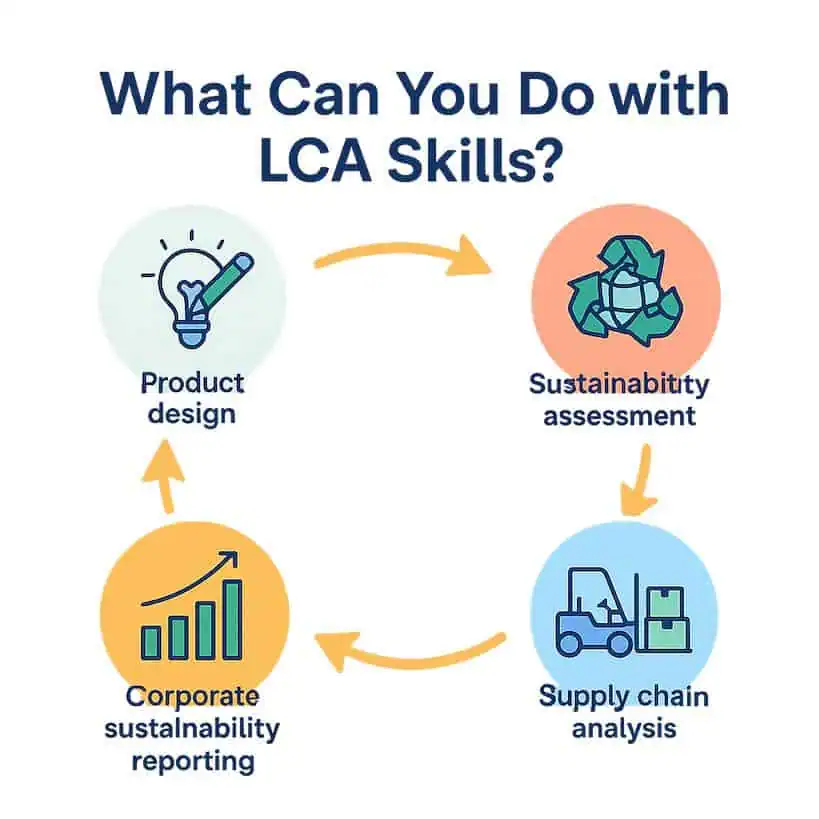
An environmental professional trained in LCA can support product design, sustainability assessments, and environmental optimization. LCA helps identify the most impactful life-cycle stages, providing valuable data for reducing emissions, improving energy efficiency, or choosing between materials. LCA is widely used in product development, supply chain analysis, corporate sustainability reporting, and carbon footprinting.
What Can You Do with EIA Skills?
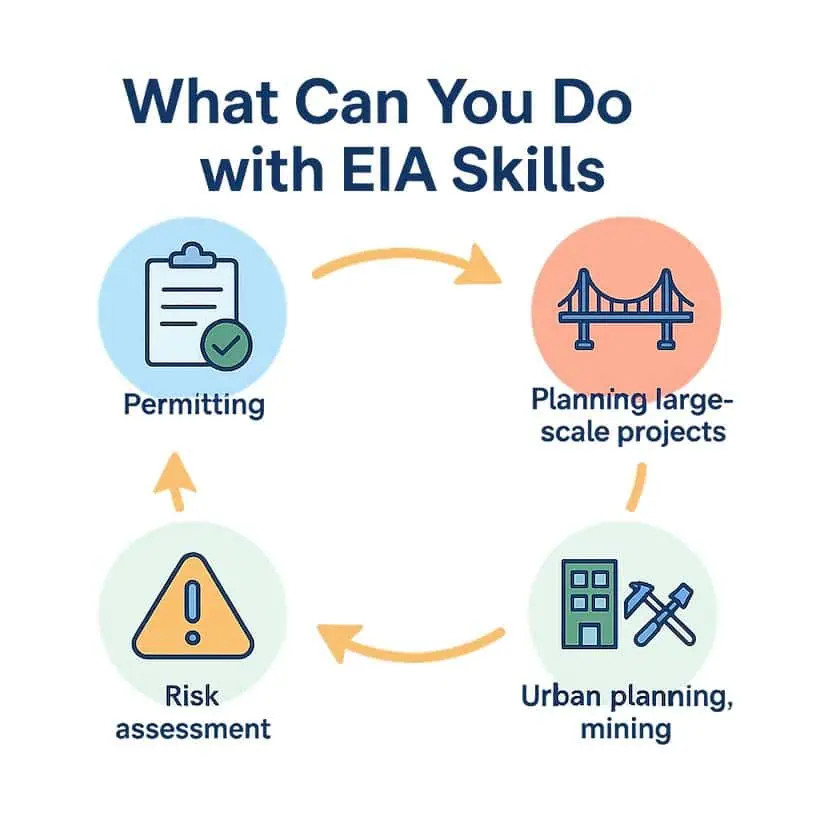
Professionals trained in EIA can work on permitting and planning large-scale projects. They are critical in assessing risks, conducting baseline environmental studies, forecasting impacts, and designing mitigation plans. EIA experts often collaborate with regulators, developers, engineers, and communities to ensure environmentally responsible project execution. Their skills apply to infrastructure, energy, transportation, urban planning, and mining sectors.
Benefits of Each Method
Benefits of LCA:
Offers a full-system, cradle-to-grave environmental view
Helps avoid burden-shifting by examining all life-cycle stages
Quantifies environmental performance using standardized metrics
Enables data-driven design, innovation, and competitive advantage
Supports carbon accounting, circular economy strategies, and ecolabels
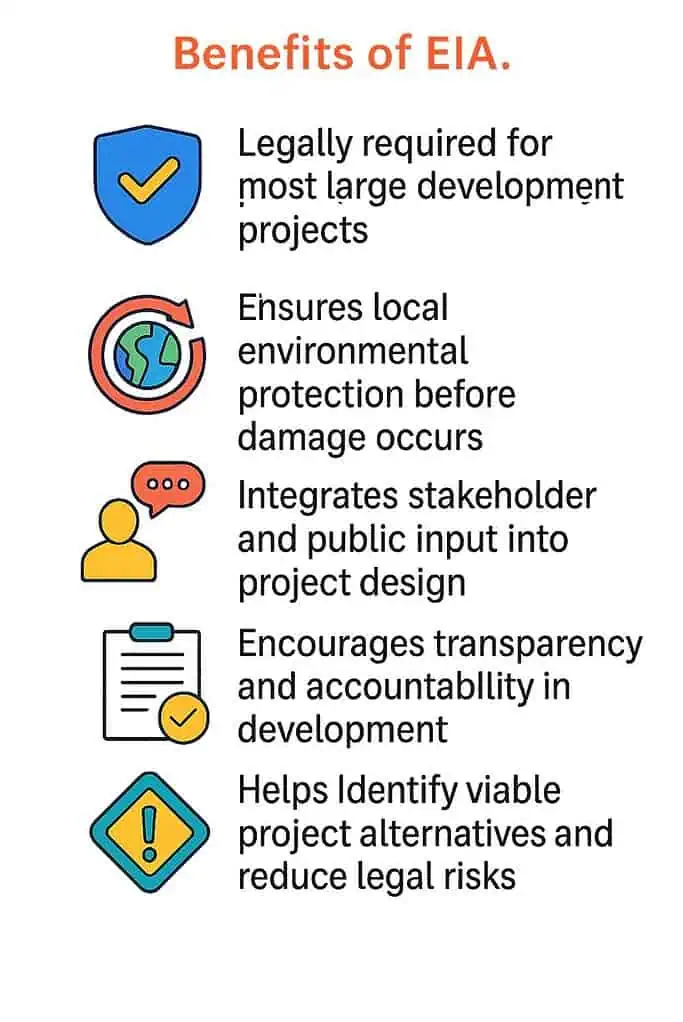
Benefits of EIA:
Legally required for most large development projects
Ensures local environmental protection before damage occurs
Integrates stakeholder and public input into project design
Encourages transparency and accountability in development
Helps identify viable project alternatives and reduce legal risks

Pros and Cons
LCA – Pros:
-
Comprehensive and holistic
-
Internationally standardized
-
Supports decision-making with numerical results
-
Scalable across product systems and sectors
LCA – Cons:
-
Data-intensive and resource-consuming
-
Requires expert modeling and software
-
Results can vary with assumptions and boundaries
-
Less effective for localized or social impacts
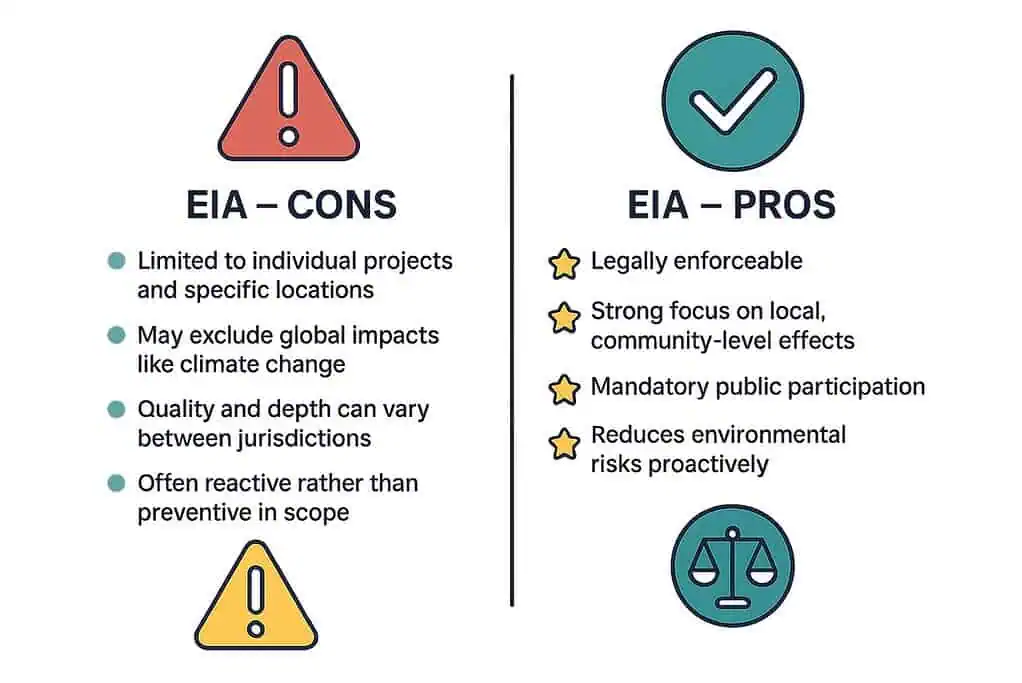
EIA – Pros:
-
Legally enforceable
-
Strong focus on local, community-level effects
-
Mandatory public participation
-
Reduces environmental risks proactively
EIA – Cons:
-
Limited to individual projects and specific locations
-
May exclude global impacts like climate change
-
Quality and depth can vary between jurisdictions
-
Often reactive rather than preventive in scope
Real-World Examples
In the automotive sector, LCA has been used to evaluate material choices in vehicle manufacturing. For example, switching from steel to aluminum may reduce weight but increase energy use during production. LCA helps balance these trade-offs. In contrast, EIA has been instrumental in assessing environmental damage from oil exploration in sensitive areas. Through detailed field assessments and stakeholder engagement, EIA helped guide remediation, enforce accountability, and inform future planning.
Conclusion
LCA and EIA serve different but complementary purposes. LCA is best for evaluating the environmental performance of products, services, or systems over time and across the supply chain. EIA is indispensable for managing the local impacts of specific projects before they are built. Environmental engineers and sustainability professionals benefit from understanding both methods. LCA offers a data-driven lens for sustainable innovation, while EIA provides a structured legal compliance and environmental protection process. Together, they support a comprehensive approach to sustainable development.
🚀 Take the Next Step with DEISO Training
Are you ready to put your knowledge into action?
Whether you’re an environmental engineer, sustainability professional, student, or policymaker — DEISO provides world-class training in both Life Cycle Assessment (LCA) and Environmental Impact Assessment (EIA).
✅ Our Training Programs Cover:
Real-world case studies and simulations
ISO-compliant LCA modeling using tools like SimaPro and OpenLCA
EIA procedures aligned with global regulatory standards
Practical applications for industry, government, and research
Certificate of completion and personalized support
🎓 Learn from industry experts in:
Remote or on-site formats
English or Japanese instruction
Flexible schedules for individuals and teams
👉 Advance your career and drive sustainable change with DEISO.
🔗 Learn more about our training programs
📩 Contact us: Contact Form
Share this:
- Email a link to a friend (Opens in new window) Email
- Share on LinkedIn (Opens in new window) LinkedIn
- Share on X (Opens in new window) X
- Share on Facebook (Opens in new window) Facebook
- Share on WhatsApp (Opens in new window) WhatsApp
- Share on Reddit (Opens in new window) Reddit
- Print (Opens in new window) Print
- More